
Learn how to identify markets and boost outbound B2B lead generation in a highly competitive environment. Build the pipeline and grow your startup!
Introduction to Outbound B2B Lead Generation
Most sales teams do not have a lead problem. They have a “who should we contact?” problem.
That is where Outbound B2B Lead Generation begins. Before sending a single email or making a cold call, you need to know which markets are worth pursuing.
Market research helps you uncover real business problems, understand where companies are spending, learn how decision-makers talk about their challenges, and spot gaps in the competition.
In 2026, this matters even more. B2B buyers often research suppliers online before speaking with sales teams, so broad targeting can waste valuable time and budget.
SAP and ZoomInfo highlight the importance of clear ideal customer profiles, buying signals, accurate data, relevant messaging, and ongoing measurement.
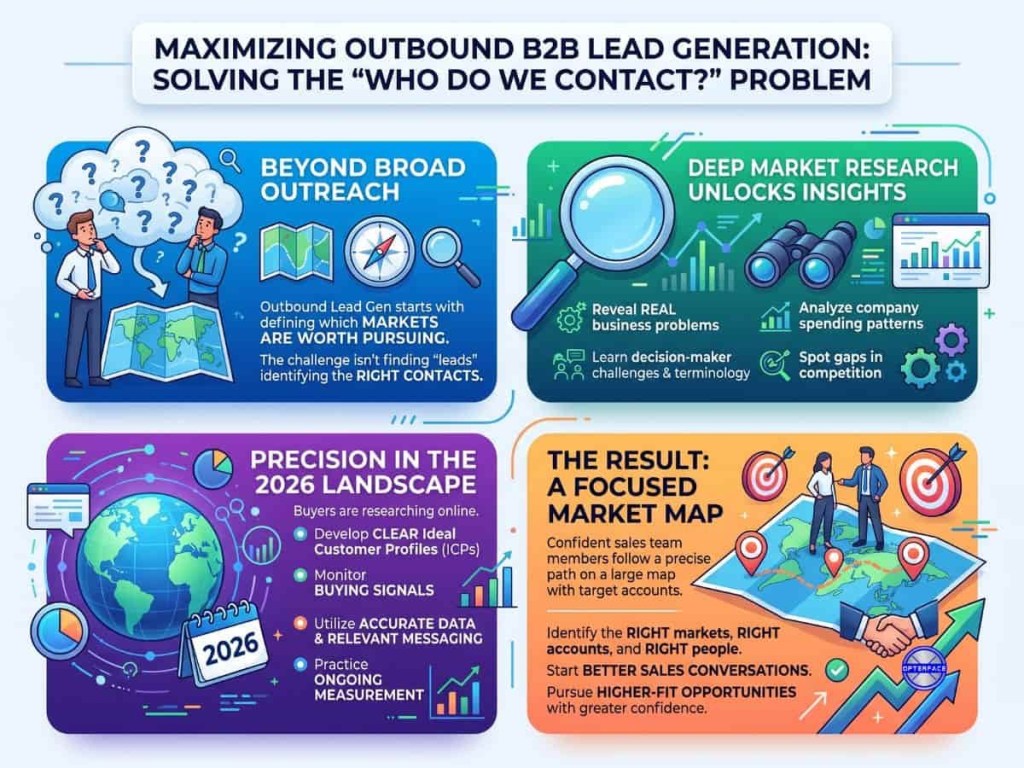
The goal is simple: identify the right market, find the right accounts, reach the right people, and start better sales conversations.
The result is a focused market map that helps your sales team pursue higher-fit opportunities with greater confidence.
Find the Right Market First
Market research should not begin with a giant spreadsheet of companies. Start by finding out where the strongest business need already exists.
A focused market gives your sales team clearer targets, better messaging, and more relevant reasons to reach out.
It’s highly recommended to define right-fit prospects around factors such as industry, region, use case, and business capacity.
Start With Five Market Signals
Research these five areas before building your prospect list:
- Problems: Find the costly problems companies are facing now. Look for issues that affect revenue, growth, efficiency, compliance, or customer experience.
- Spending: Identify the products, services, and solutions already getting budget. Following existing spending can reveal where demand is strongest.
- Buyer language: Study customer calls, interviews, reviews, forums, podcasts, and sales conversations. Note the exact words decision-makers use to describe their needs.
- Competition: Review competitor websites, offers, messaging, pricing, and positioning. Look for gaps that buyers still want solved.
- Triggers: Track events that can create a reason to buy, such as funding, hiring, leadership changes, expansion, or technology changes.
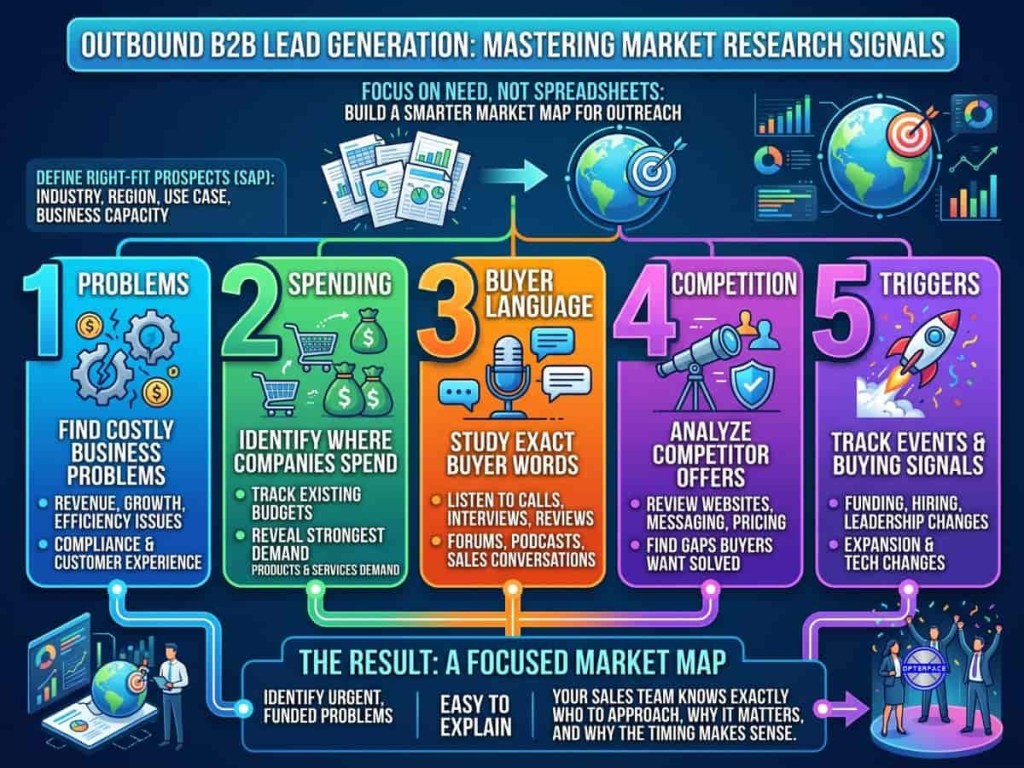
This research creates a clearer market map. It helps you identify a problem that is urgent, funded, and easy to explain. Most importantly, it makes Outbound B2B
Lead Generation more focused because your team knows exactly who to approach, why the account matters, and why the timing makes sense.
Build a Sharp ICP
A strong Ideal Customer Profile (ICP) tells your sales team who deserves attention first. It removes guesswork from prospecting and makes every message more relevant.
Instead of chasing every company that could buy, focus on companies that match your offer, have a clear need, and show signs that the timing may be right.
Define Your Best-Fit Company
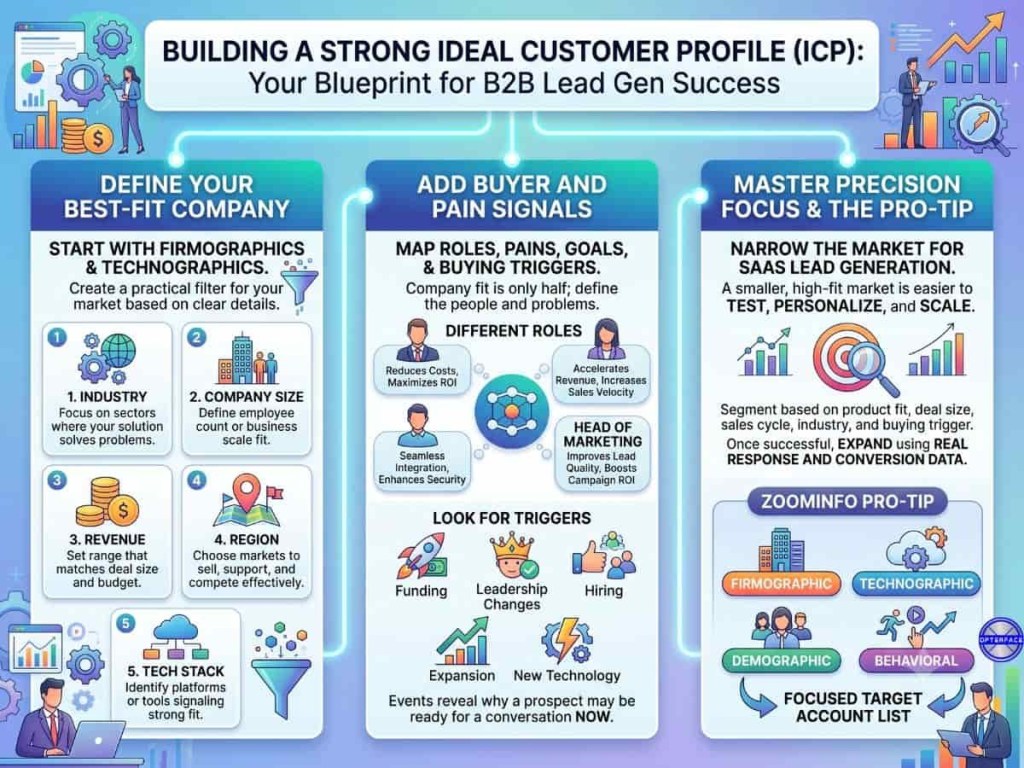
Start with the core firmographic details. These help you create a practical market filter.
- Industry: Focus on sectors where your solution solves common problems.
- Company size: Define employee count or business scale that fits your offer.
- Revenue: Set a range that matches your usual deal size and budget.
- Region: Choose markets where you can sell, support, and compete effectively.
- Tech stack: Identify platforms or tools that signal a strong product fit.
For b2b lead generation for technology companies, technographic data can be especially useful.
A SaaS company already using a competing platform may be a stronger target than a random firm because its need is easier to understand.
Add Buyer and Pain Signals
Company fit is only half the picture. Your ICP should also explain who influences the purchase and what problem they care about.
Define the target role first. Then map its common pain points, goals, risks, and buying triggers. A CFO, CRO, CTO, and Head of Marketing may all view the same solution very differently.
For b2b lead generation for technology companies, this extra layer helps sales teams create more relevant messages. It also gives outbound prospecting a stronger reason to begin.
Look for triggers such as funding, leadership changes, hiring, expansion, new technology, or major business shifts. These events can reveal why a prospect may be ready for a conversation now.
Narrow the Market for SaaS
An Outbound lead generation service for b2b saas should not target every SaaS company. Start with a clear segment based on product fit, deal size, sales cycle, industry, and buying trigger.
For an Outbound lead generation service for B2B SaaS, a smaller, high-fit market is easier to test, personalize, and scale. Once the segment performs well, expand the ICP using real response and conversion data.
You must combine firmographic, technographic, demographic, and behavioral data, then turn those findings into a focused target account list.
Let Intent Set the Timing
Fit tells you who. Intent tells you when. A company may perfectly match your ICP, yet still be a poor prospect today. Look for signals that suggest a fresh problem, new budget, or changing priorities.
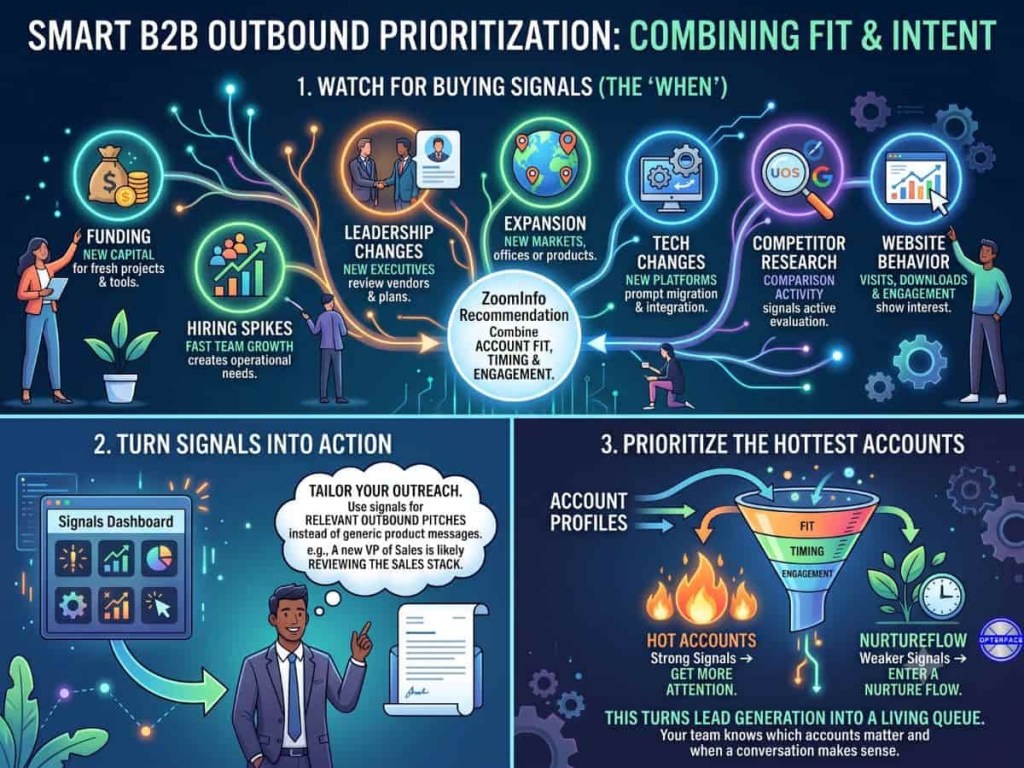
Watch for Buying Signals
Track events that can show a company is entering a buying cycle:
- Funding: New capital can support fresh projects and tools.
- Hiring spikes: Fast team growth can create new operational needs.
- Leadership changes: New executives may review vendors and plans.
- Expansion: New markets, offices, or products can create demand.
- Tech changes: New platforms may create migration or integration needs.
- Competitor research: Comparison activity can signal active evaluation.
- Website behavior: Visits, downloads, and engagement can show interest.
It’s important to combine account fit with timing and engagement when prioritizing leads.
Turn Signals Into Action
Do not collect signals just to admire them in a dashboard. Use them to change your outreach.
A new VP of Sales, for example, may be reviewing the sales stack. Your outbound sales pitch can then focus on a likely priority, rather than sending a generic product message.
Prioritize the Hottest Accounts
Score accounts by fit, timing, and engagement. Give the strongest signals more attention, while weaker signals can enter a nurture flow.
This turns Outbound B2B Lead Generation into a living queue. Your team knows not only which accounts matter, but when a conversation may make sense.
Build a Better Outreach System
Now launch outbound prospecting.
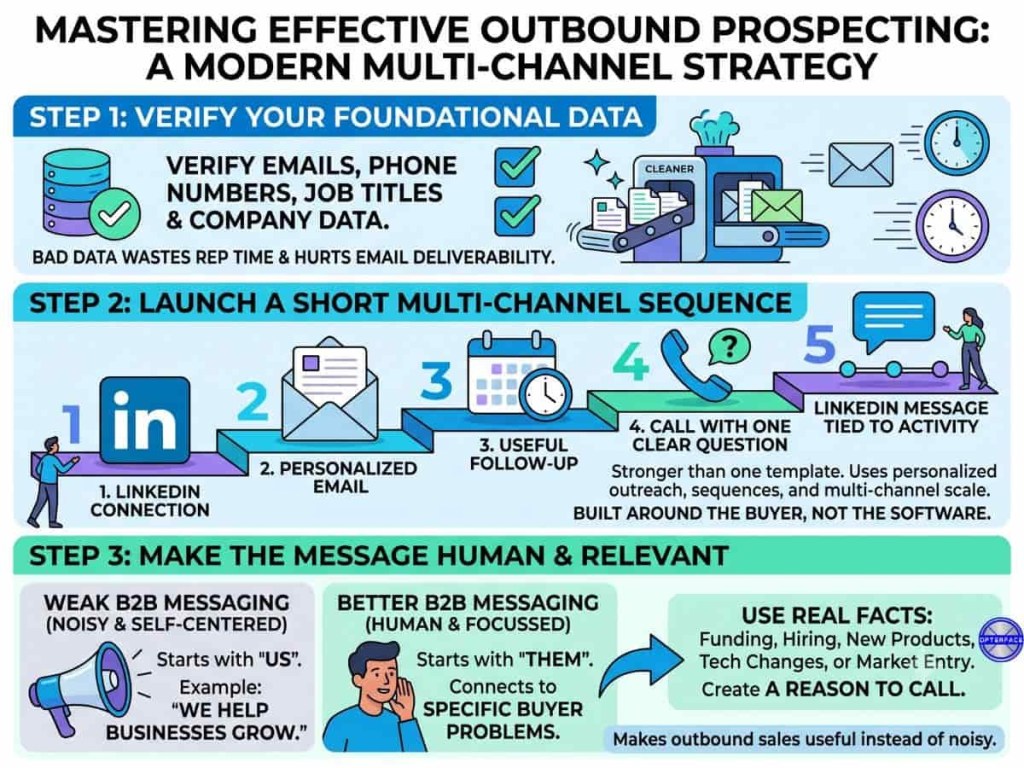
Verify emails, phone numbers, job titles, and company data. Bad data wastes rep time and can hurt email deliverability.
Then use a short multi-channel sequence:
- LinkedIn connection.
- Personalized email.
- Useful follow-up.
- Call with one clear question.
- LinkedIn message tied to recent activity.
This is stronger outbound sales prospecting than blasting one template, especially in outbound b2b marketing.
Artisan highlights personalized email, purposeful calling, LinkedIn outreach, sequences, events, referrals, and ABM as useful outbound tactics.
Small Business Expo also stresses multi-channel outreach and AI-assisted scale.
For an outbound lead generation service, this sequence should be built around the buyer, not the software being sold.
Make the Message Human
Weak outbound b2b marketing says, “We help businesses grow.” Better outbound b2b marketing starts with a specific buyer problem.
One talks about you. The other starts with the buyer.
Your outbound lead generation service should use real facts. Mention a funding round, hiring trend, new product, tech change, or market entry. Then connect it to one clear problem.
That approach makes the outbound sales pitch useful instead of noisy. It also improves outbound sales prospecting because reps have a reason to call.
Make Lead Costs Work
Cost-effective lead generation is not about sending the cheapest email.
It is about wasting fewer touches.
Start narrow. Test one market. Measure replies. Remove poor-fit accounts. Refresh data. Scale only after the numbers work.
You must track activity, response, meetings, pipeline contribution, cost per lead, and other efficiency measures.
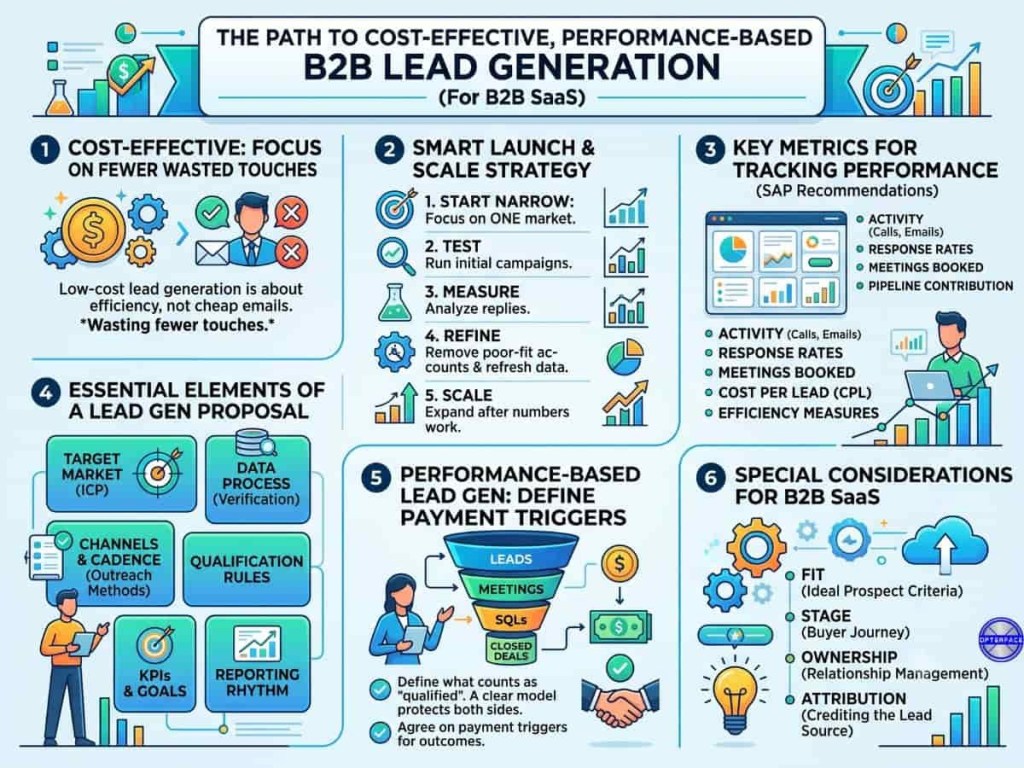
A lead generation proposal should show the target market, data process, channels, cadence, qualification rules, KPIs, and reporting rhythm.
A second lead generation proposal should define what counts as qualified.
This is where performance-based lead generation needs care. A lead, meeting, SQL, and closed deal are different outcomes.
Define the payment trigger. A clear performance-based lead generation model protects both sides.
For an Outbound lead generation service for b2b saas, also agree on fit, stage, ownership, and attribution.
Measure What Actually Matters
Good Outbound B2B Lead Generation is not set-and-forget.
Track:
- Connect rate
- Reply rate
- Meeting set rate
- SQL conversion
- Pipeline contribution
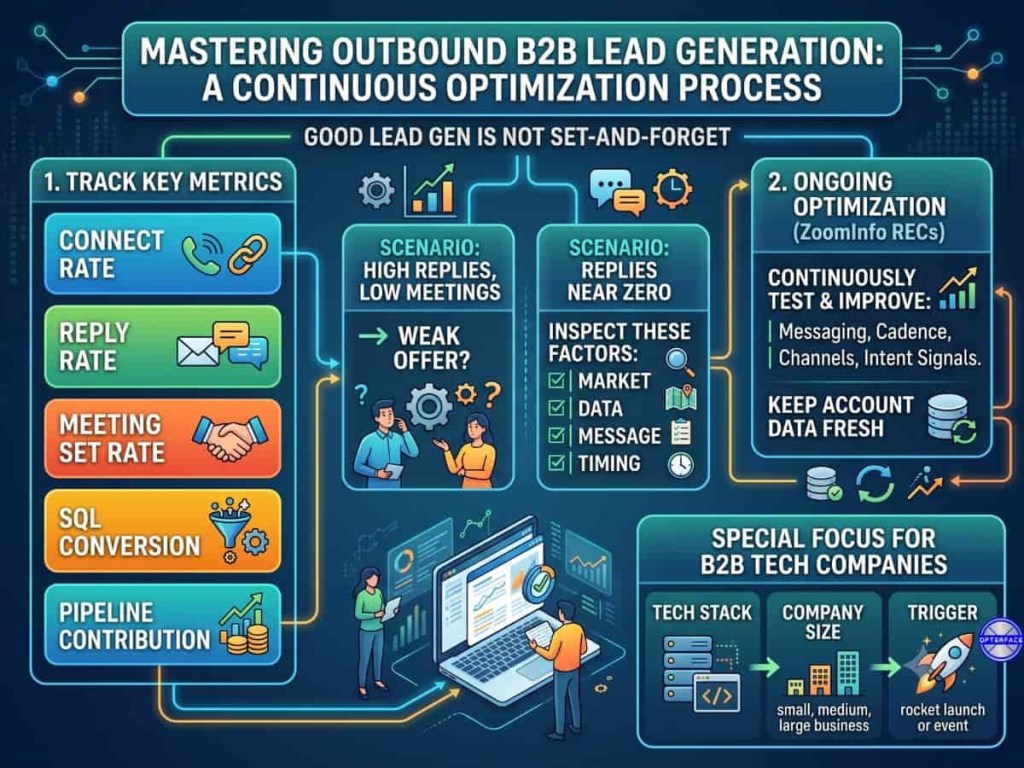
If replies are high but meetings are low, the offer may be weak. If replies are near zero, inspect the market, data, message, and timing.
It’s crucial to conduct testing of messaging, cadence, channels, and intent signals while keeping account data fresh.
For b2b lead generation for technology companies, compare results by tech stack, company size, and trigger.
FAQs on Outbound B2B Lead Generation
Still have questions about Outbound B2B Lead Generation? Good. The details matter when you are choosing channels, building prospect lists, or reviewing a service.
These quick answers cover common concerns around targeting, prospecting, pricing, proposals, qualification, and performance so you can make smarter sales decisions with less guesswork.
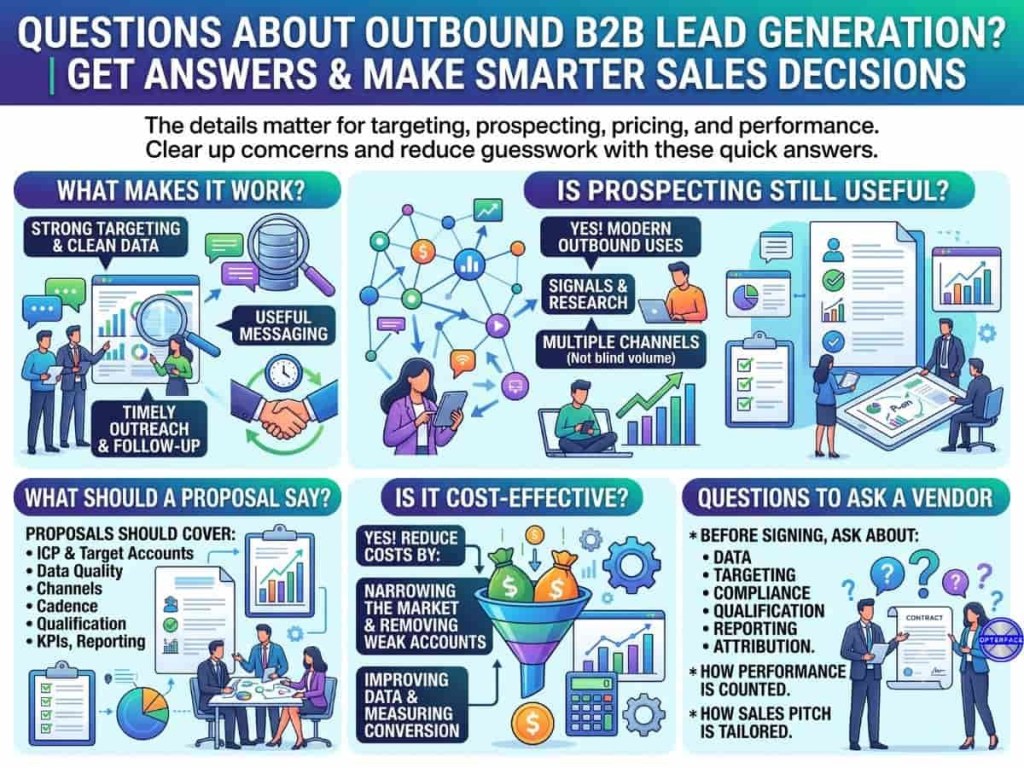
What makes Outbound B2B Lead Generation work?
Strong targeting, clean data, useful messaging, timely outreach, and follow-up make Outbound B2B Lead Generation work. For any outbound lead generation service, these basics still matter.
Is outbound prospecting still useful?
Yes. Modern outbound prospecting uses signals, research, and multiple channels instead of blind volume.
What should a lead generation proposal say?
A lead generation proposal should cover the ICP, target accounts, data quality, channels, cadence, qualification, KPIs, and reporting.
Is cost-effective lead generation possible?
Yes. Cost-effective lead generation comes from narrowing the market, removing weak accounts, improving data, and measuring conversion.
What lead generation questions should I ask?
Use lead generation questions about data, targeting, compliance, qualification, reporting, and attribution. Ask how lead generation questions are handled before signing.
Ask how performance-based lead generation results are counted. For an outbound lead generation service, ask how an outbound sales pitch is tailored to your market.
Conclusion on Outbound B2B Lead Generation
The strongest Outbound B2B Lead Generation programs do not start with a giant list of names. They start with market insight.
Before your team sends another email, make sure you know who needs your solution, why they need it, and what could make them act now.
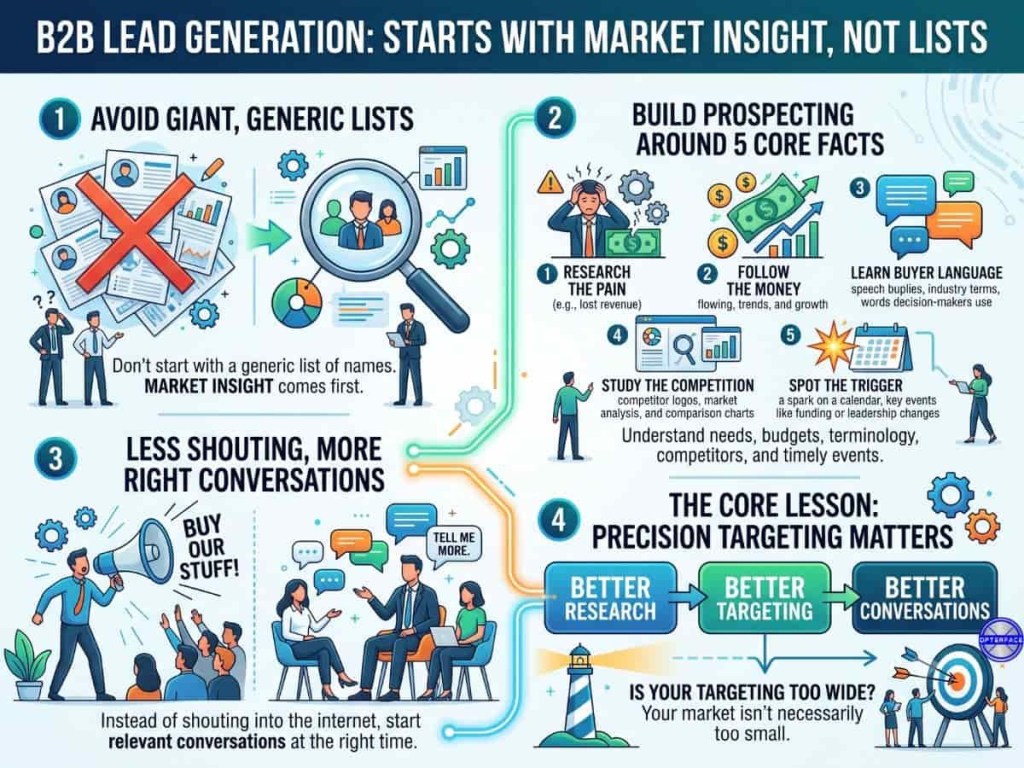
Research the pain. Follow the money. Learn buyer language. Study the competition. Spot the trigger. Then build outbound sales prospecting around those facts.
That is how Outbound B2B Lead Generation becomes less like shouting into the internet and more like starting the right conversation at the right time.
The lesson is simple: better research creates better targeting, and better targeting creates better conversations. Your market may not be too small. Your targeting may simply be too wide.
Suggested Reads:
How Much Does Supply Chain Management Software Cost & Why?
Top 5 IaaS Startup Ideas as AI Changes Infrastructure as a Service
NVIDIA Case Study: Journey of a Gaming Brand to a Tech Giant
How to Rank on AI Overviews: Boost Your AI Visibility & Authority

