
Learn how to rank on AI Overviews, get cited by AI models, and stay relevant in the transforming online search landscape.
Introduction: How to Rank on AI Overviews
How to Rank on AI Overviews has become one of the most popular questions in digital marketing, and with good reason. You can rank first on Google today and still lose visibility if your content is not chosen for an AI-generated answer. That’s because modern search is more than just ranking web pages. It is about giving the best answer.
Google’s AI Overviews have transformed the way people discover information. Instead of clicking ten blue links, users are frequently given a concise AI-generated summary that combines data from multiple trusted sources. They often only visit one or no websites. This shift requires your content to do more than just rank. It deserves to be cited.
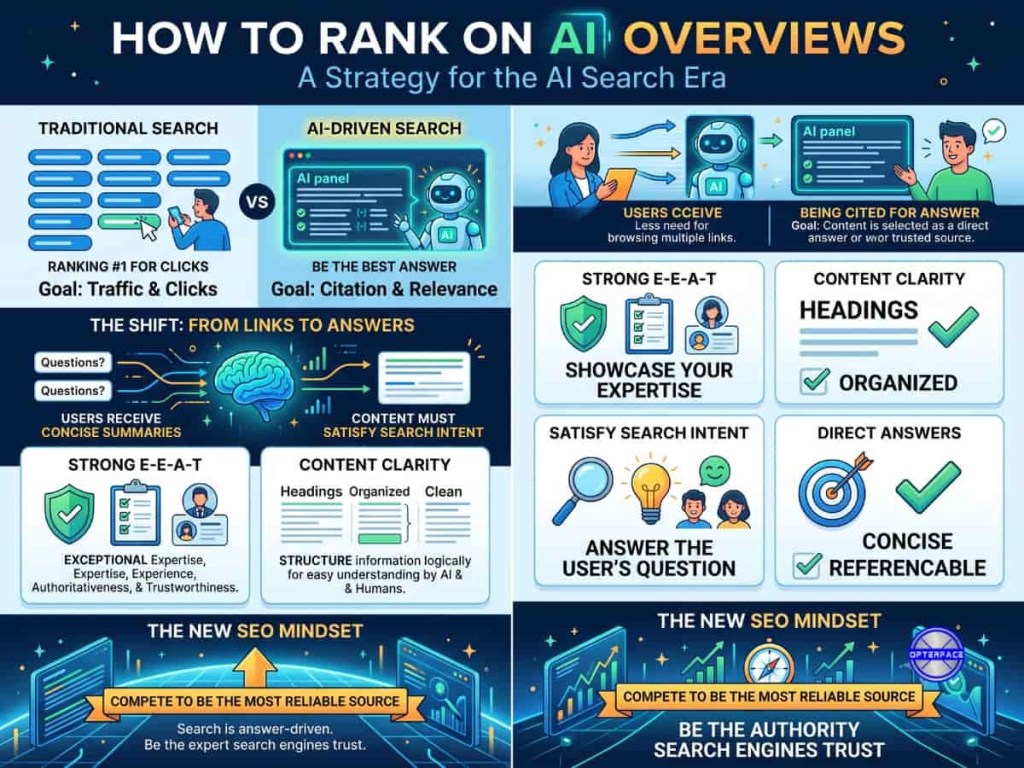
Google Search in 2026 will be more answer-driven than ever before, so digital marketers should prioritise “How to Rank on AI Overviews”. With AI Overviews and AI Mode becoming standard features of Search, visibility is now determined by content quality, clarity, and trustworthiness rather than rankings.
Search engines are increasingly rewarding pages that demonstrate strong E-E-A-T, meet search intent, and provide direct answers that AI systems can easily understand and reference.
So, how does this impact your SEO strategy? This means you’re no longer competing solely for clicks. You are competing to be the most trustworthy source of information.
Why AI Overviews Are Changing Search
Search has changed several times over the last two decades. We switched from keyword matching to backlinks, mobile-first indexing, semantic search, and useful content updates. Today, artificial intelligence drives the next evolution.
Platforms such as Google AI Overviews, ChatGPT Search, Perplexity, and Gemini no longer recommend a single website. Instead, they consult multiple credible sources, summarise the information, and present a single, conversational response. This shift has rendered overview visibility equally valuable as traditional search rankings.
Consider two websites with the same keyword.
- Website A ranks first, but the answer is hidden behind a lengthy introduction.
- Website B ranks fourth but offers a clear answer in the first few sentences, followed by practical examples and up-to-date information.
Which one is most likely to be cited by AI?
In most cases, it is Website B.
This is because AI systems prioritise information that is simple to understand, well-organised, and immediately useful. They don’t just reward the top-ranked page. They reward the page that provides the best answer to the user’s question.
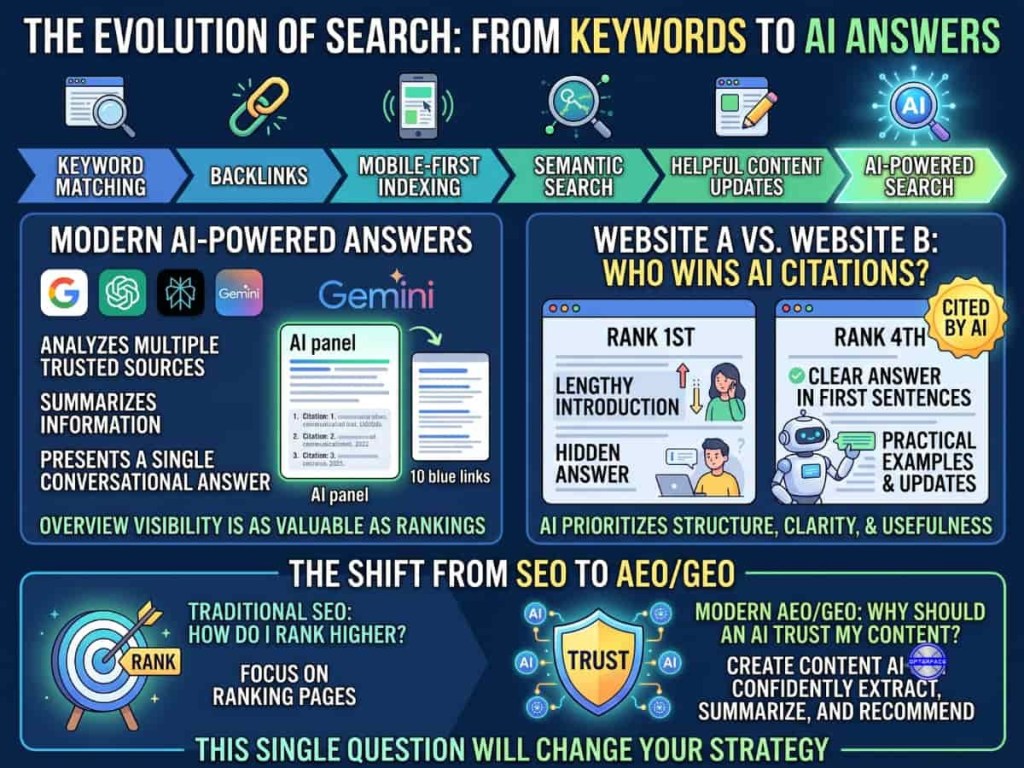
This is why understanding how to rank on AI Overviews necessitates a distinct mindset. Traditional SEO aimed to rank pages. Modern AEO (Answer Engine Optimisation) and GEO (Generative Engine Optimisation) aim to create content that AI can confidently extract, summarise, and recommend.
The goal is no longer to enquire, “How do I rank higher?” Instead, consider: “Why should an AI trust my content over everyone else’s?” That single question will alter how you conduct research, write, optimise, and update each piece of content you publish.
How AI Overviews Choose Sources
If you’re wondering how to appear in AI Overviews, the answer is simpler than most people realise. AI does not reward the page with the most keywords or the longest article. Instead, it honours the page that provides the clearest, most accurate, and trustworthy response. Google has confirmed that AI-powered search experiences use many of the same systems as traditional search, such as crawling, indexing, and ranking.
However, AI Overviews go a step further by determining whether your content can be reliably extracted, summarised, and cited. That is why pages with excellent structured data, clear formatting, and direct answers frequently outperform pages that simply rank well.
The Three Pillars of AI Overview Rankings
If you want to consistently rank in AI Overviews, look beyond keywords. Every successful page is based on three key pillars.
1. Topic Authority
AI prefers websites that demonstrate complete expertise over isolated knowledge. Instead of publishing a single article on AI search, create an ecosystem around the subject. For example, if your pillar page focuses on How to Rank on AI Overviews, supplement it with related articles covering:
- AI Overview Optimisation
- How to rank in Google AI overviews.
- Search intent for AI searches.
- Structured data for AI
- Content Clusters
- Entity SEO and AI citation tracking.
This approach strengthens your content strategy and helps search engines recognise your website as an authoritative resource rather than a collection of unrelated articles.

2. Answer Quality
Modern artificial intelligence systems reward content that respects the reader’s time. Instead of introducing the topic in several paragraphs, address the main question right away. Once you’ve given your answer, supplement it with explanations, examples, and practical insights.
For example, instead of starting with the history of artificial intelligence, begin with a brief explanation of how to rank on AI Overviews, followed by actionable steps. This “answer-first” structure is perfectly compatible with answer engine optimisation. It increases the likelihood that your content will be selected for AI-generated summaries.
3. Trust Signals
Even the best-written article will not be cited unless it is credible. Before referencing a page, AI systems evaluate several trust signals, including:
- Current information
- Consistent brand and entity mentions.
- Reliable external references.
- Strong topical coverage
- Logical internal linking.
- demonstrated expertise
Consider trust as the deciding factor between two equally good articles. When the quality of the information is comparable, AI is more likely to recommend the source that appears more trustworthy and authoritative.
Why Relevance Often Beats Domain Authority
Many marketers believe that only large websites can appear in AI-generated answers. While established brands have advantages, smaller websites frequently receive citations for publishing highly focused, high-quality content.
Consider a niche cybersecurity blog that publishes detailed, up-to-date guides on compliance. Now compare it to a large technology website that briefly discusses the same topic. Although the larger site may have more overall authority, specialised websites frequently provide more detailed, relevant answers.
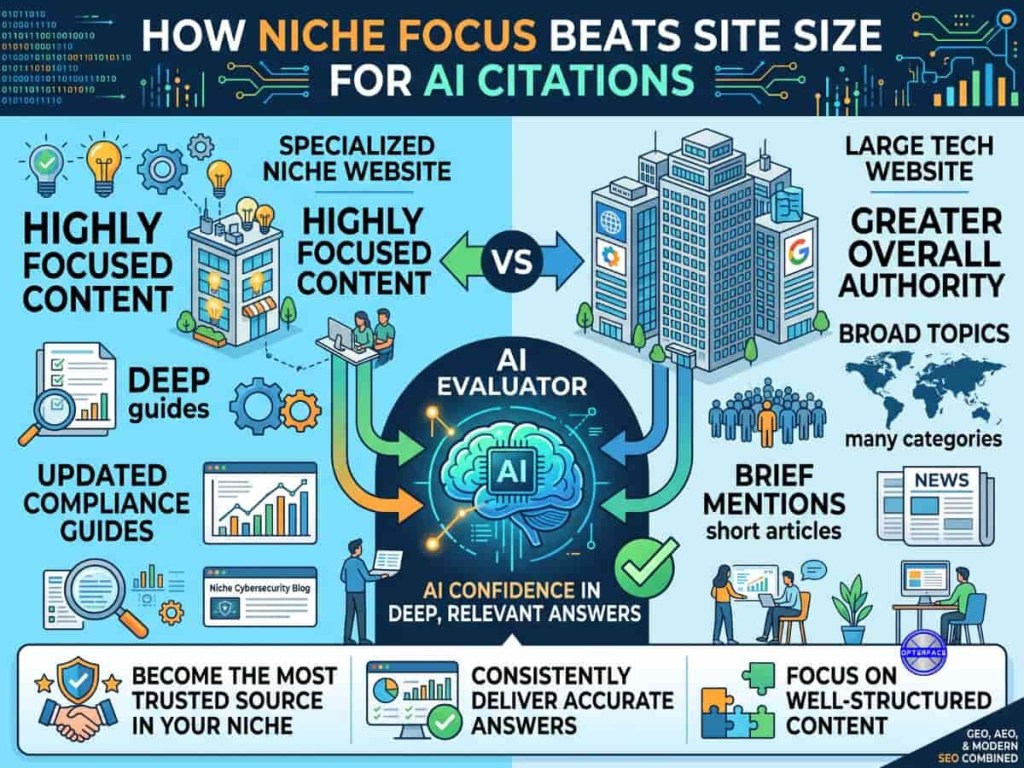
This is where GEO, AEO, and modern SEO converge. Instead of attempting to become an expert in everything, focus on becoming the most trusted source in your field. When your content consistently provides accurate, practical, and well-structured answers, AI systems become more confident in citing it in search results.
How to Structure Content That AI Wants to Cite
Creating excellent content is only half of the battle. The other half is presenting it in a manner that AI systems can easily comprehend. Poor content organization is one of the most common reasons why pages do not appear in AI-generated responses. Even valuable insights can be overlooked because they are difficult to extract.
To improve AI overview optimisation, use these best practices:
- Answer the primary question in the first 50-75 words.
- Use descriptive H2 and H3 headings that correspond to real search queries.
- Organise data using bullet points, numbered lists, and comparison tables.
- Provide examples that explain complex concepts in simple terms.
- Wherever possible, use structured data to support your content.
- Statistics, examples, and recommendations should be updated on a regular basis to keep the information relevant.
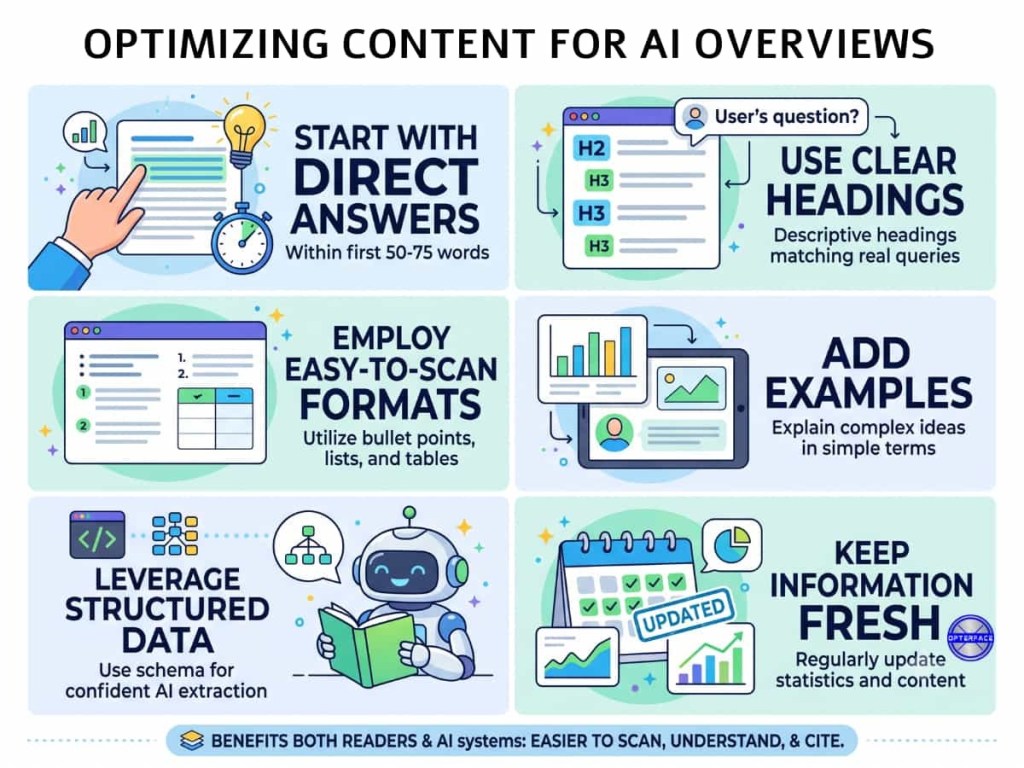
This strategy benefits both readers and AI systems by making your content easier to scan, comprehend, and cite.
Search Intent and Topic Clusters Matter More Than Ever
A strong article is no longer sufficient. AI search engines treat your website as a connected knowledge base, rather than a collection of isolated pages. This is why successful brands create content clusters around a central topic rather than publishing random blog posts.
For example, if your pillar article is about How to Rank on AI Overviews, supporting content could include AI SEO, ranking in AI Answers, entity SEO, technical SEO, structured data, AI citation tracking, and search intent. These pages work together to strengthen your SEO content marketing strategy and reinforce your overall subject matter expertise.

It is equally important to match search intent. Before writing, consider what problem the reader is attempting to solve. Someone searching for “What are AI Overviews?” requires an explanation, whereas someone searching for “How do I rank on Google when AI Overviews appear?” seeks actionable advice. Aligning your content with user intent boosts both engagement and overall visibility.
AI Overview Optimization Checklist
Before you publish your next article, go through this quick checklist.
- Respond to the main question immediately.
- Cover relevant questions to establish topical authority.
- Use descriptive headings and follow logical formatting.
- Include examples and practical insights.
- Implement relevant structured data.
- Review content regularly to ensure accuracy and freshness.
- Strengthen internal links between related articles.
- Google Search Console, Semrush, and Ahrefs are all useful tools for monitoring performance.
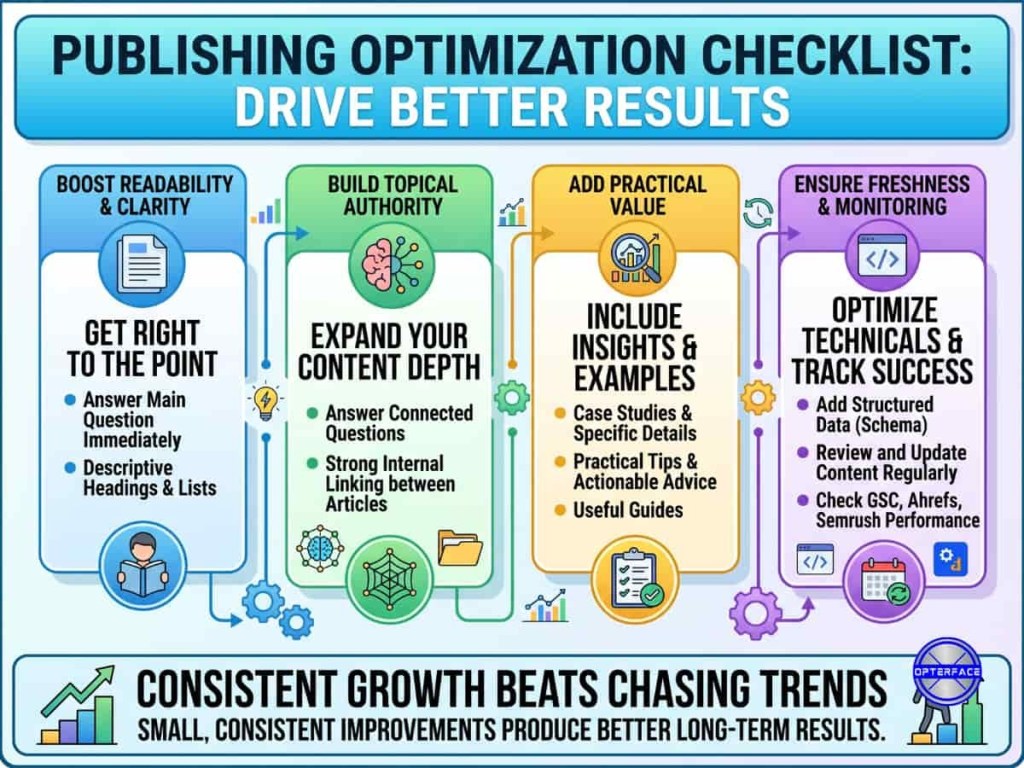
Small, consistent improvements are often more effective in the long run than chasing every new algorithm update.
Common Mistakes That Prevent AI Citations
Many websites still overlook AI citations because they prioritise rankings over utility. Avoid the following common mistakes:
- Writing for keywords rather than readers.
- Delaying the response with lengthy introductions.
- Publishing thin or out-of-date content.
- Ignore search intent.
- Weak internal linking and topical coverage.
- Failure to update articles following major industry changes.
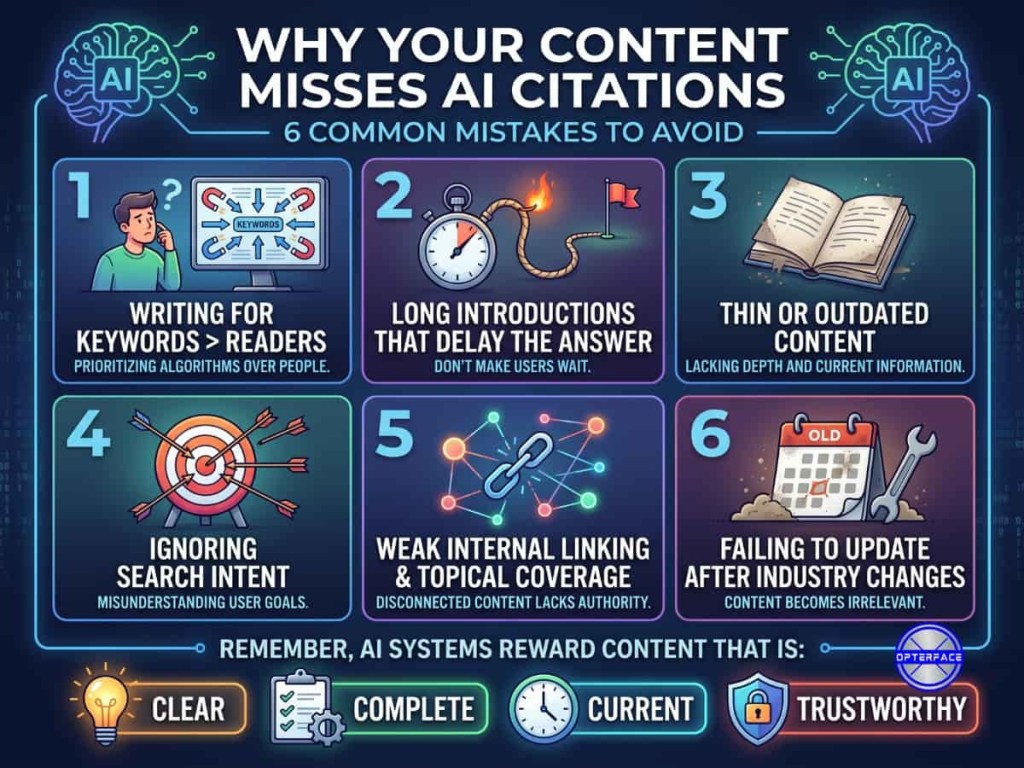
Remember that AI systems value content that is clear, complete, current, and trustworthy.
FAQs: How to Rank on AI Overviews
Still unsure how to rank on AI Overviews? These frequently asked questions provide quick, actionable answers to help you improve AI visibility, strengthen your SEO strategy, and increase AI citations.
How to Rank on AI Overviews?
Create content that directly answers questions, demonstrates expertise, adheres to best SEO, AEO, and GEO practices, and meets user search intent.
How to rank in Google AI Overviews?
Focus on topical authority, structured content, technical SEO, up-to-date information, and answer-first writing.
How to appear in AI Overviews?
Create credible, well-organized content that includes strong E-E-A-T signals, clear headings, relevant entities, and practical examples.
What content performs best?
Step-by-step instructions, comparisons, checklists, FAQs, definitions, and comprehensive pillar pages consistently outperform because they are simple for AI systems to extract and summarise.
Conclusion on How to Rank on AI Overviews
Learning how to rank on AI Overviews no longer requires creating more content or following every Google update. It is about becoming the most trusted source of information in your field. As Google Search evolves in 2026, websites that combine technical excellence with high-quality content will succeed.
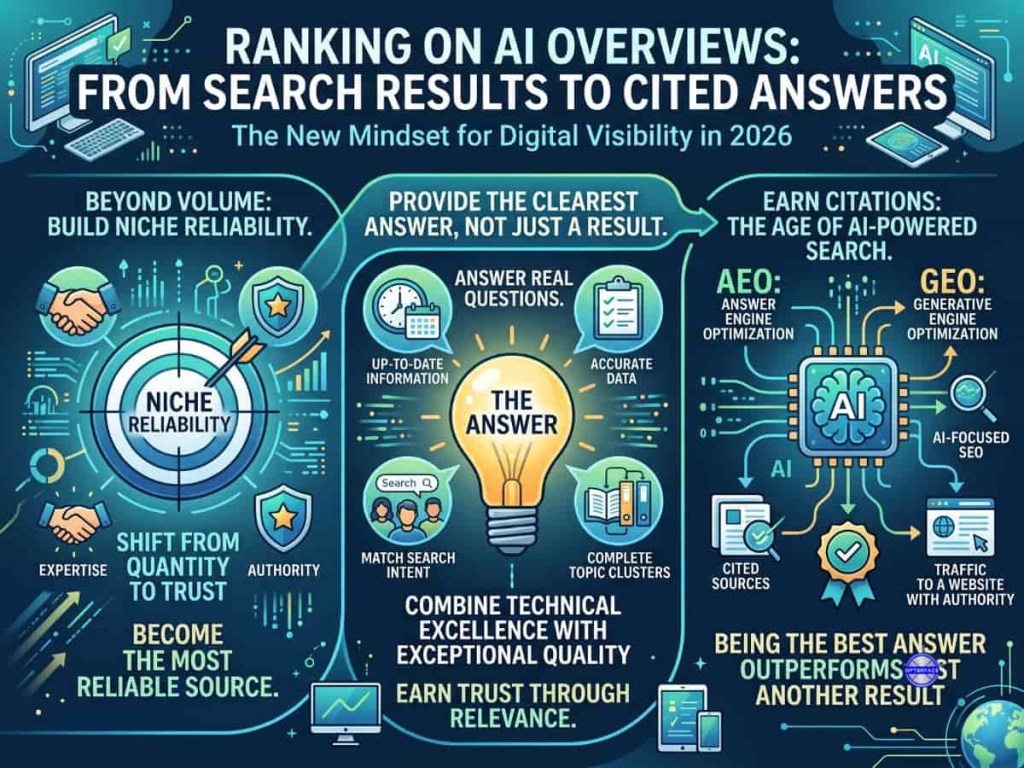
Focus on answering genuine questions, matching search intent, creating comprehensive topic clusters, and establishing trust through accurate, up-to-date information. Instead of asking how to rank higher, ask how you can provide the most concise and valuable response possible.
Traditional SEO helped websites be discovered. Today, AEO, GEO, and AI-focused SEO can help your expertise be cited. In the age of AI-powered search, becoming the best answer will always outperform simply being one of the results.
Read a short version of this blog here.

