
Here is the Best Investment Plan with Low Risk for salaried employees to get financial freedom. Start today and secure your future!
Introduction: Best Investment Plan with Low Risk
Your salary arrives on the first. Rent takes its share. EMIs take another bite. Groceries, subscriptions, and weekend plans finish the job. By the end of the month, your wealth-building plan is wondering where everybody went!
Sound familiar?
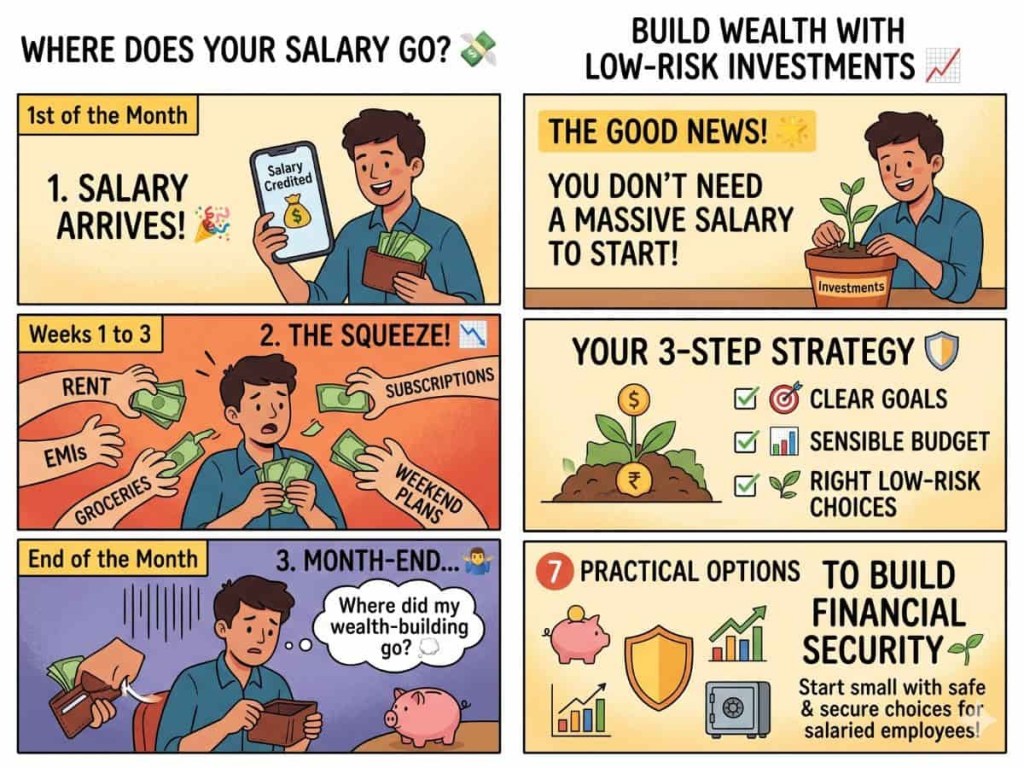
The good news is that you don’t need a massive salary to start investing. You need a clear goal, a sensible budget, and the right investment choices. The best low-risk investment plan depends on your income, financial goals, and need for safety. Let’s explore seven practical options that can help salaried employees build financial security without unnecessary risk.
Why Low Risk Investing Matters
A regular salary offers one major advantage: consistency. You can set aside a fixed amount every month instead of waiting for a lucky windfall.
However, keeping all your money in a savings account may not meet your long-term goals. Inflation can reduce what your money buys over time. Meanwhile, retirement, home ownership, and family expenses need careful planning.

Good low risk investment planning starts with three priorities:
- Protect money needed for emergencies.
- Grow savings for future goals.
- Choose investments that match your comfort with risk.
Remember, low risk does not always mean zero risk. The goal is to protect your financial stability while making your money work sensibly.
7 Best Low Risk Investment Plans
What are the best investment options for a salaried employee in India? The answer depends on when you need your money and how much uncertainty you can accept.
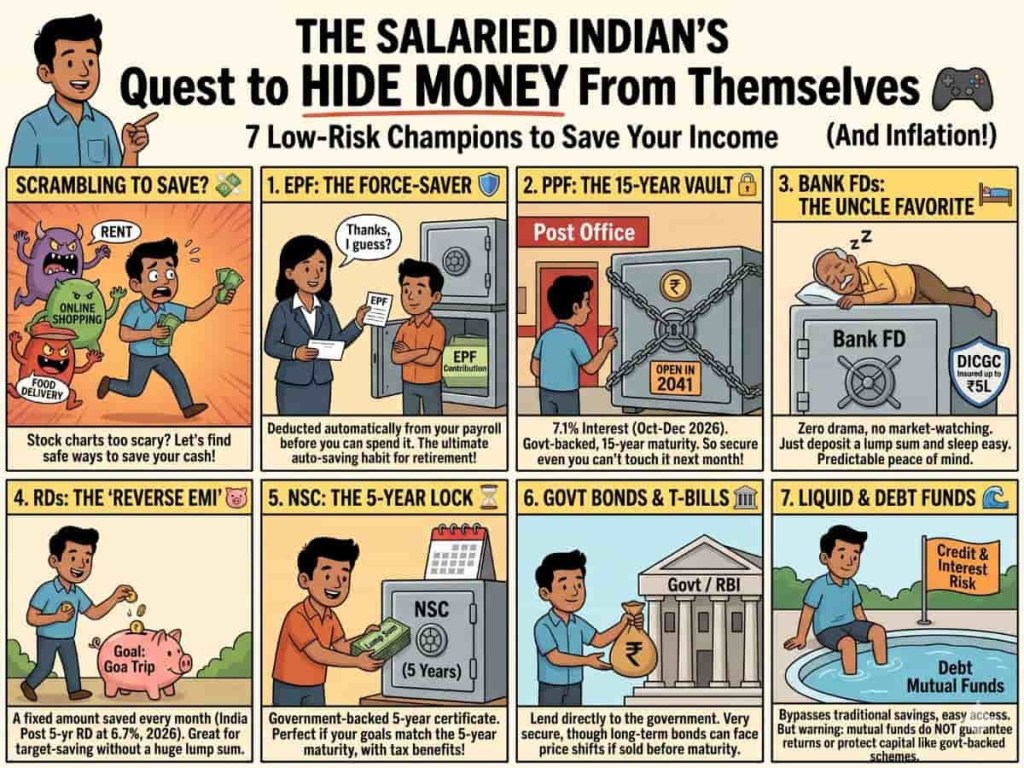
1. Employee Provident Fund (EPF)
EPF is a retirement savings scheme linked to eligible salaried employment. Contributions from employees and employers help build a retirement corpus over time.
Its biggest advantage is discipline. Contributions are generally deducted through payroll, so investing becomes a habit rather than a monthly debate with yourself.
EPF suits long-term retirement goals. Check the applicable interest rate, withdrawal rules, and tax conditions before making decisions.
2. Public Provident Fund (PPF)
PPF is a government-backed savings scheme designed for long-term investing. It offers a 15-year maturity period and eligible tax benefits.
India Post lists the PPF interest rate at 7.1% per annum for the October–December 2026 quarter. Rates can change under government reviews. Check the official India Post savings schemes.
PPF can suit conservative investors saving for retirement or other distant goals. However, its long tenure makes it unsuitable for money you may need next month.
3. Bank Fixed Deposits (FDs)
Want predictable returns without watching stock market charts every morning? Fixed deposits deserve a place on your shortlist.
You deposit a lump sum for a chosen period and receive interest according to the bank’s terms. FDs can support short-term goals, planned purchases, or part of your emergency reserve.
Compare interest rates, maturity dates, premature-withdrawal penalties, and tax treatment before choosing. Eligible bank deposits are insured by DICGC up to ₹5 lakh per depositor, per bank, including principal and interest, subject to its rules.
4. Recurring Deposits (RDs)
An RD is useful when you want to save regularly but cannot invest a large lump sum.
You deposit a fixed amount every month for a chosen tenure. This makes RDs a practical monthly investment plan for goals such as buying a phone, funding a holiday, or preparing for a planned expense.
India Post lists its five-year recurring deposit rate at 6.7% per annum, compounded quarterly, for the current period.
Choose an RD whose monthly contribution fits your budget comfortably.
5. National Savings Certificate (NSC)
NSC is a government-backed savings product with a five-year tenure. It can suit investors seeking predictable returns and eligible tax benefits.
Unlike an RD, which builds savings through regular deposits, NSC generally involves investing a lump sum. This makes the two products suitable for different saving habits.
Before investing, check the current interest rate, tax treatment, and withdrawal restrictions. NSC may be a good investment plan for five years if your goal matches its maturity period.
6. Government Bonds and Treasury Bills
Government securities allow investors to lend money to the government under defined terms.
Treasury Bills generally have shorter maturities, while government bonds may run for much longer. They can suit investors who value understanding their maturity dates and payment terms in advance.
However, longer-term bonds can face price fluctuations if sold before maturity. Compare liquidity, taxation, and interest-rate risks before investing.
7. Liquid and Short-Duration Debt Funds
These mutual funds invest in short-term debt and money-market instruments. They can offer convenient access to money and may suit investors looking beyond a traditional savings account.
But there is an important distinction: mutual funds do not guarantee returns or protect capital in the same way as a government-backed savings scheme. Credit and interest-rate risks remain.
Use them only after understanding the fund’s portfolio and risk level.
How to Choose the Right Investment
The best investment plan with low risk should match your timeline, not simply offer an attractive interest rate.
Use this basic framework:
- Short-term goals: Consider suitable savings accounts or FDs.
- Medium-term goals: Compare FDs, RDs, and NSC against your target date.
- Long-term goals: Consider EPF and PPF for eligible retirement or savings objectives.
- Emergency money: Prioritise easy access over chasing higher returns.
For additional perspective, read ICICI Prudential’s guide to investment options for salaried employees.
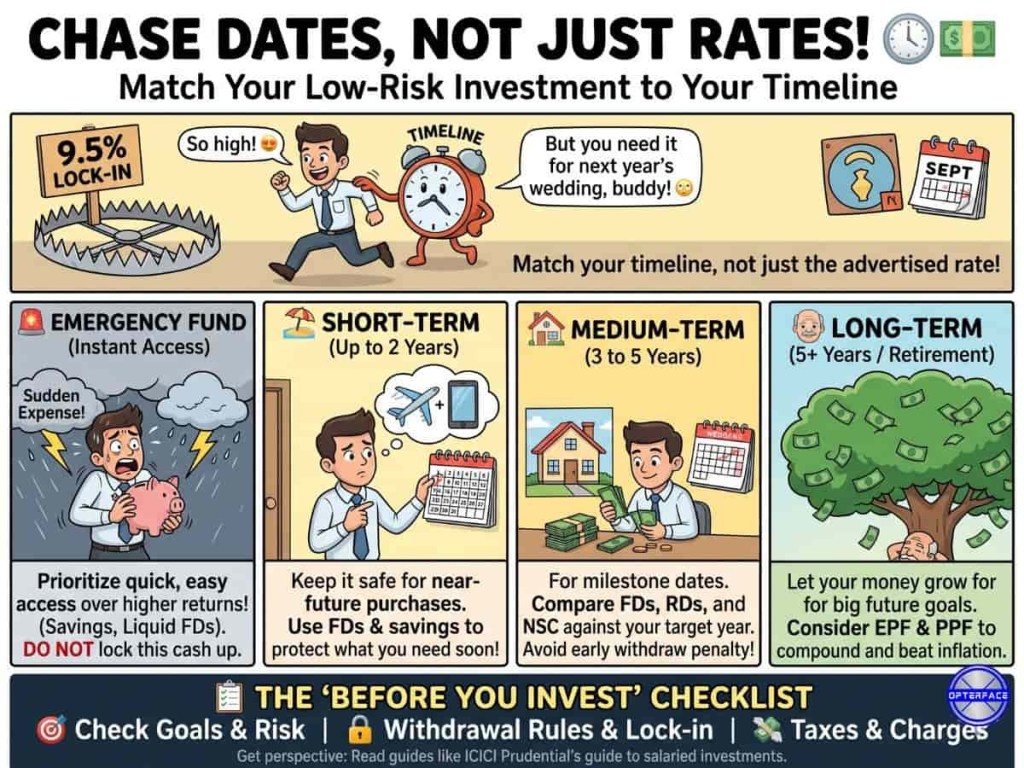
Check your financial goals, risk tolerance, investment duration, charges, taxes, and withdrawal rules before choosing. These elements of investment matter just as much as the advertised return.
Build an Investment Habit From Your Salary
You don’t need to invest half your salary on day one. Start with an amount you can maintain without borrowing for everyday expenses.
The 50/30/20 budgeting rule offers a useful starting point:
- Allocate 50% to essential expenses.
- Allocate 30% to wants and lifestyle spending.
- Set aside 20% for savings and investments.
These percentages are guidelines, not strict rules. Adjust them to suit your income and responsibilities. Federal Bank’s salary-saving guide also explains budgeting and emergency funds.
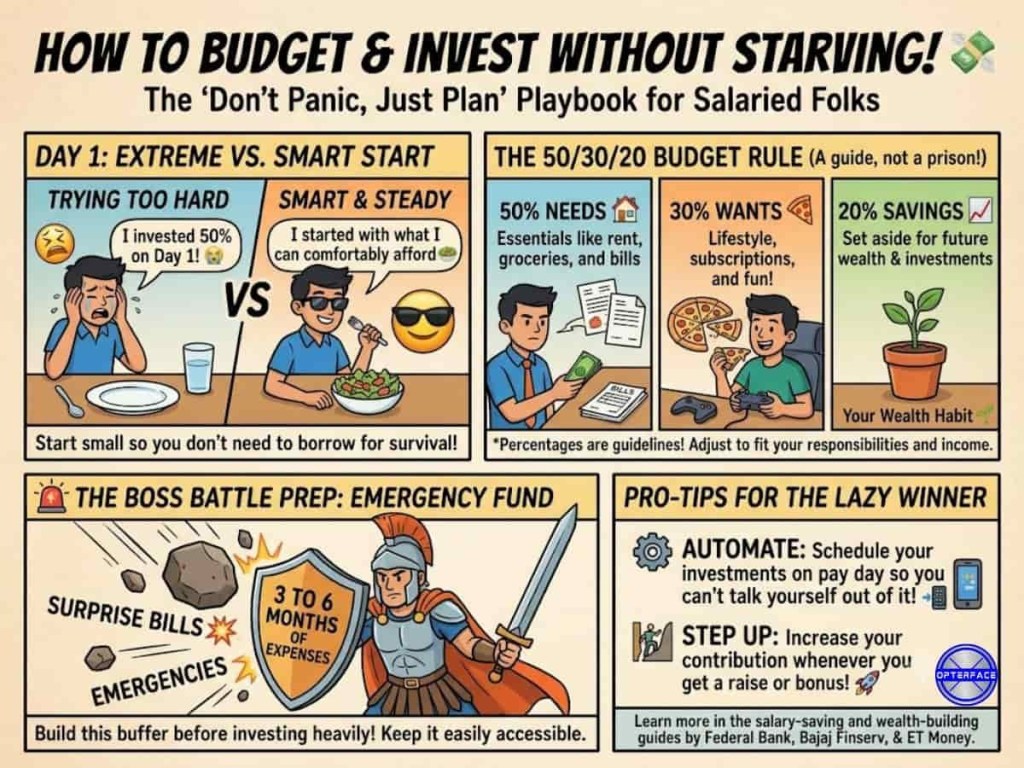
Before investing heavily, aim to build an emergency fund covering three to six months of essential expenses. Automate regular contributions where practical, and consider increasing them when your salary rises.
You can also explore Bajaj Finserv’s guide to investing from your salary and ET Money’s wealth-building guide.
Can Low Risk Investments Give High Returns?
Every investor wants the best of both worlds: high returns and complete safety. Unfortunately, those two goals do not always go together.
A best investment plan with low risk focuses on realistic returns, capital protection, and suitability. It does not rely on promises of extraordinary profits without risk.
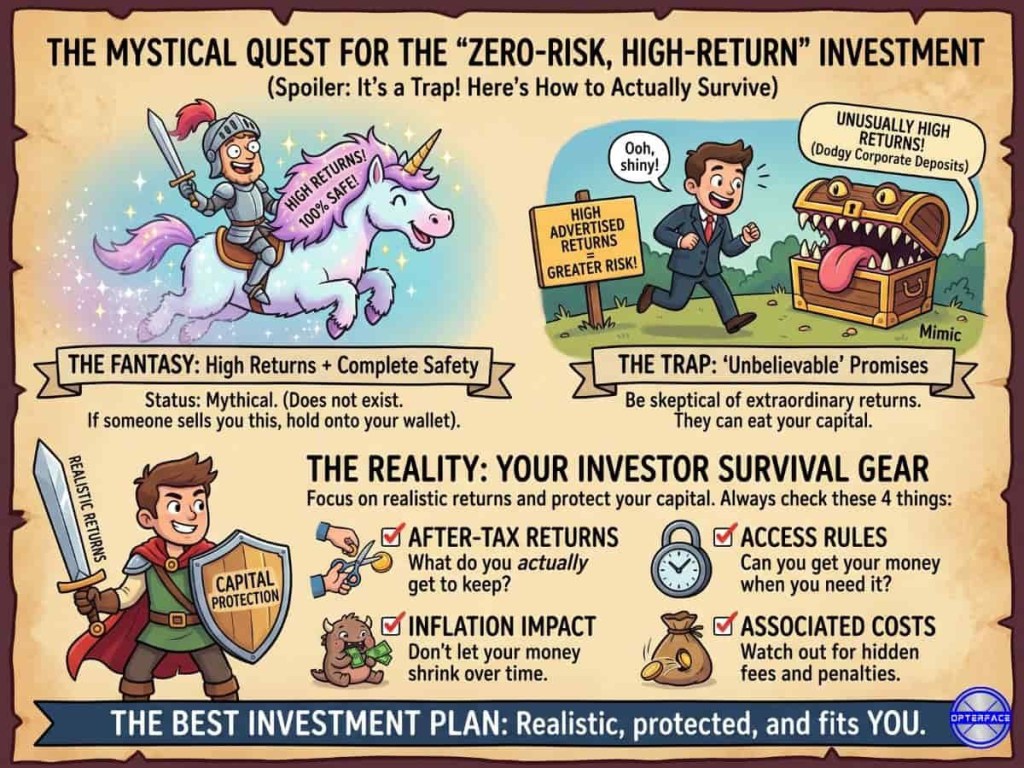
Compare investments using their after-tax returns, inflation impact, access rules, and associated costs. Be especially careful with corporate deposits or products advertising unusually high interest rates. Higher advertised returns can come with greater risk.
FAQs: Best Investment Plan with Low Risk
Choosing the right investment can feel confusing, especially when balancing safety, returns, and monthly expenses. These FAQs answer common questions to help salaried employees invest with confidence.
1. What is the safest investment for salaried employees?
Eligible government-backed savings schemes, such as PPF, are generally considered Low Risk. Bank deposits also offer protections subject to applicable insurance limits and conditions.
2. How much should I invest every month?
Start with an amount that fits your budget after essential expenses and debt payments. Increase it gradually as your income grows.
3. Which investment is best for five years?
FDs and NSCs may suit some five-year goals. Compare their maturity terms, liquidity, and tax treatment before investing.
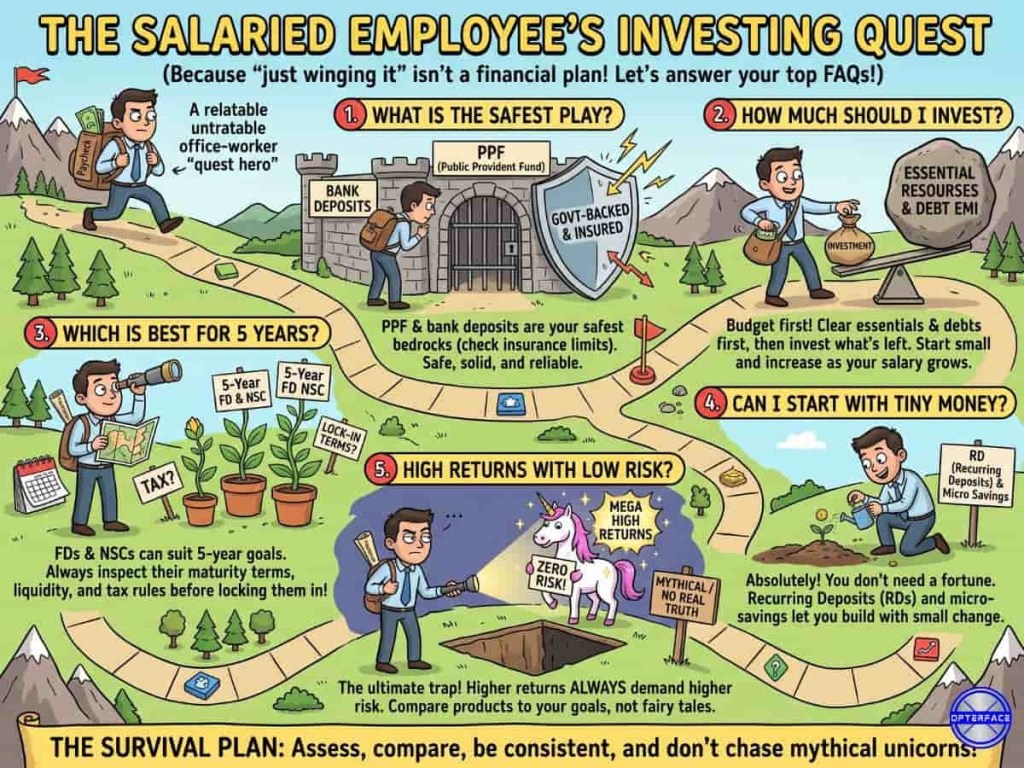
4. Can I start investing with little money?
Yes. RDs and eligible savings schemes allow regular saving with modest contributions. Check the minimum deposit and account rules.
5. Which investment offers high returns with low risk?
There is no universal winner. Higher returns often involve additional risk, so compare each product against your goal and risk tolerance.
Conclusion: Start Small, Build Steadily
The Best Investment Plan with Low Risk is not necessarily the one with the highest advertised rate. It is the one that suits your goals, protects your financial stability, and helps you invest consistently.
Build your emergency fund, compare suitable options, and automate a manageable contribution. Review your plan as your life changes.
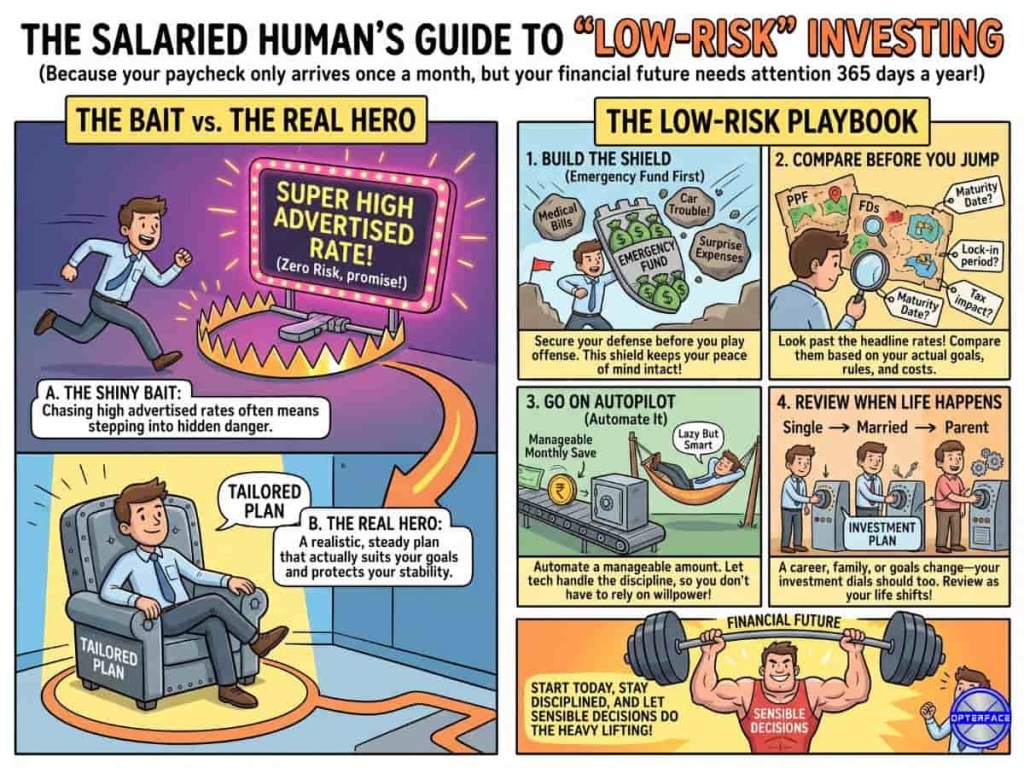
Your salary may arrive once a month. Your financial future deserves attention all year. Start today, stay disciplined, and let sensible decisions do the heavy lifting.

