
These top 5 IaaS startup ideas are relevant in the AI era. IaaS is changing, and it’s time to adapt. Start your IaaS business this year!
Introduction to IaaS Startup Ideas
The IaaS startup market is expanding beyond storage and virtual servers. In 2026, the biggest opportunity will be where AI meets IaaS (Infrastructure as a Service) startups, as businesses deploy large language models, automation, data pipelines, and intelligent applications that require more than traditional hosting can provide.
The increasing demand for IaaS Startups (Infrastructure as a Service) in cloud computing reflects the need for more computing power, faster deployment, stronger security, and flexible scaling.
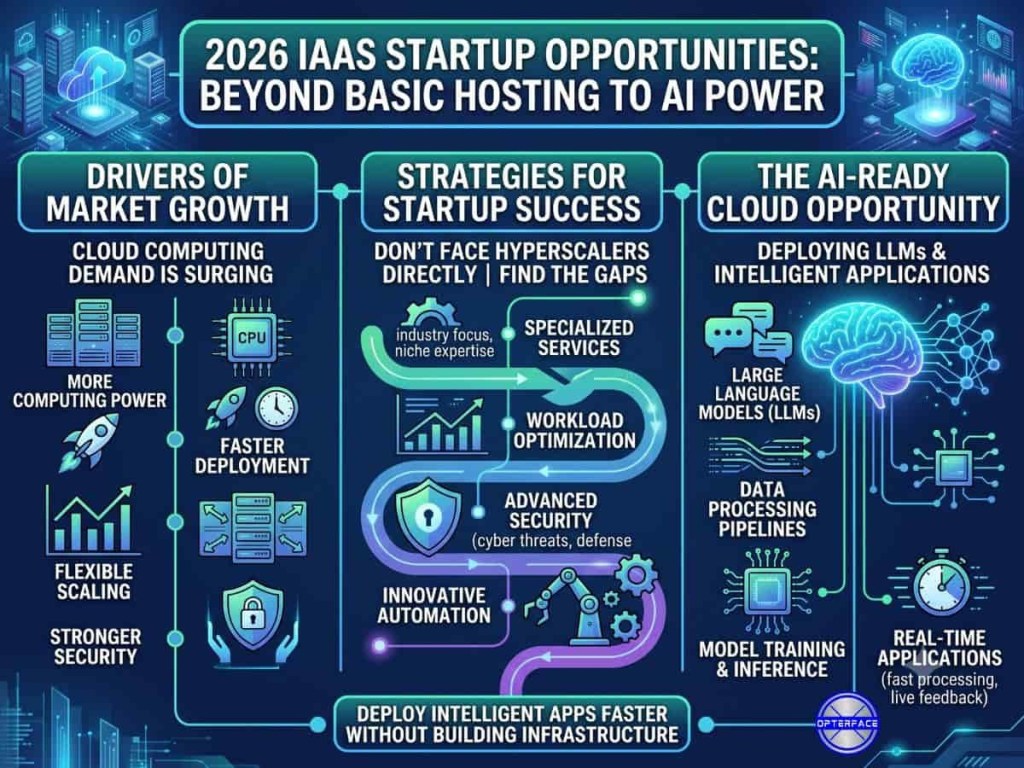
Although large cloud providers continue to dominate the modern IaaS market, new opportunities emerge in specialised services, workload optimisation, security, automation, and industry-specific infrastructure. Startups do not have to face hyperscalers directly.
Instead, they can use focused solutions to fill the gaps left by other providers. The rise of AI-ready IaaS cloud environments is driving demand for infrastructure that can support model training, inference, data processing, and real-time applications without requiring businesses to build everything themselves.
What are IaaS Startups (Infrastructure as a Service) and Why Is It Growing Again?
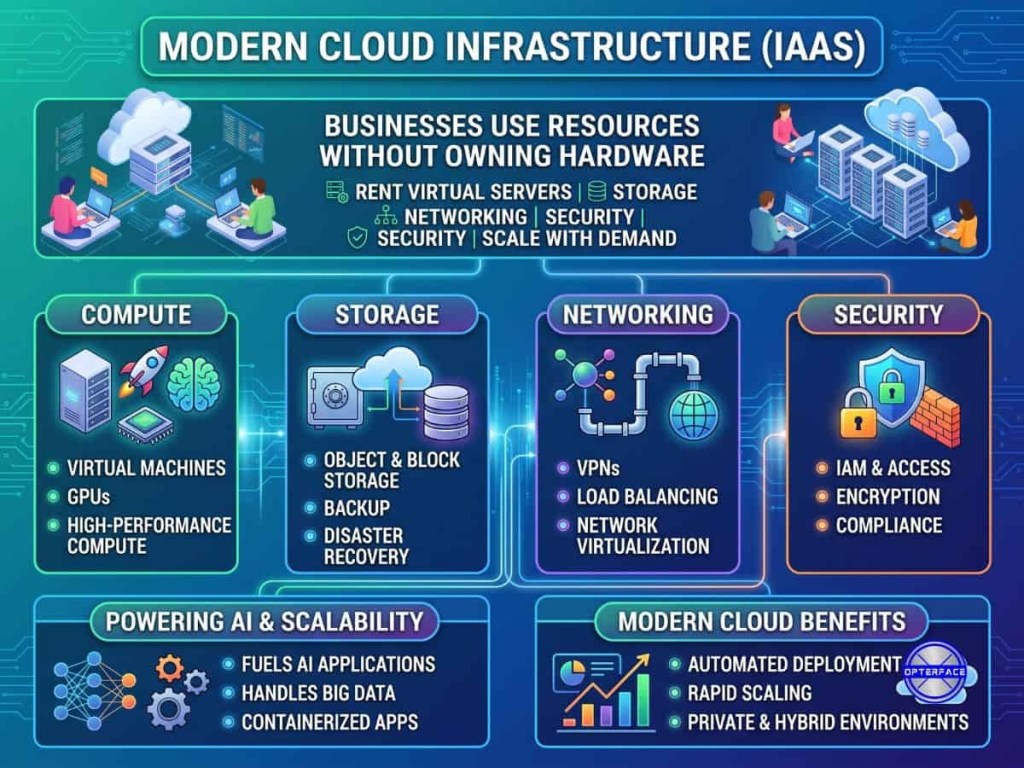
IaaS Startups (Infrastructure as a Service) allow businesses to use computing resources without owning physical hardware. Companies can rent virtual machines, storage, networking, and security tools and scale them as demand changes.
Common IaaS (Infrastructure as a Service) examples include virtual servers, cloud storage, load balancers, and managed networking.
What Is IaaS in Cloud Computing?
The infrastructure layer is where providers manage physical hardware, and customers manage applications, operating systems, and workloads. Modern IaaS addresses four areas:
- Compute: Virtual machines, GPUs, and high-performance computing.
- Storage: Object and block storage, backup, and disaster recovery.
- Networking: Virtual private networks, load balancing, virtualised network environments, and network as a service.
- Security: Identity and access management, encryption, compliance, and cloud network security.
AI is driving up demand for scalable cloud infrastructure that can run containerised apps, automate tasks, and handle large amounts of data.
Unlike traditional hosting, modern platforms make use of virtualisation for cloud computing, automated deployment, rapid scaling, Google Kubernetes Engine, Compute Engine, private cloud, and hybrid environments.
The Big Shift: How AI Is Changing IaaS Startups (Infrastructure as a Service)
IaaS Startup Ideas are now focused on AI-ready infrastructure. AI workloads require GPUs, large datasets, fast storage, and high-speed networks, which creates opportunities for focused startups.
Rather than building another massive cloud, a provider can provide GPU capacity, simpler billing, managed environments, secure networks, regional infrastructure, or workload-specific services.
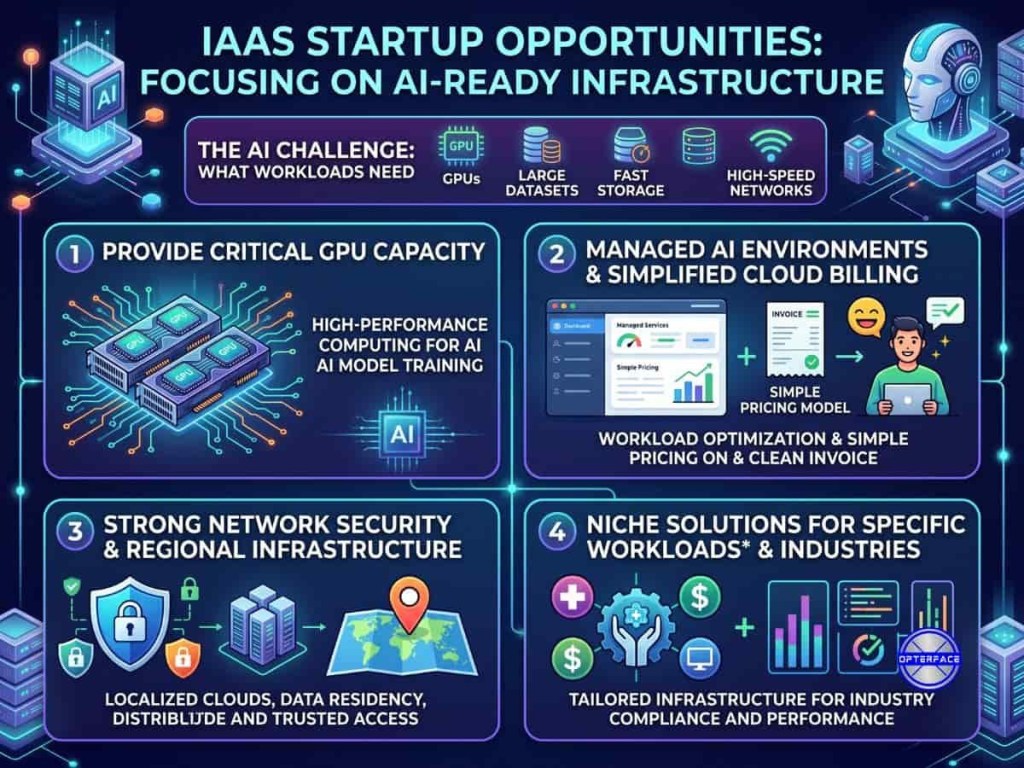
Distributed infrastructure also lets niche cloud providers serve specific regions, industries, or workloads. Strong cloud network security becomes increasingly important as the number of connected workloads grows.
Framework: What Makes a Strong IaaS Startup in the AI Era?
A strong IaaS startup idea solves a costly problem more effectively than a general provider. Look for wasted compute power, low uptime, slow deployment, difficult security, or complicated cloud management. Then, build around five tests.
- Market Demand: Is the problem expensive and real?
- Technical Complexity: Can you operate the service consistently?
- Recurring Revenue Potential: Will customers require it repeatedly?
- Scalability: Can the business expand without increasing costs at the same rate?
- Competitive Advantage: Why would a buyer choose you?
Use IaaS integration, IaaS monitoring, infrastructure as code, and appropriate infrastructure as code tools to reduce complexity and improve consistency.
Your competitive advantage could come from specialised hardware, proprietary automation, industry expertise, compliance controls, or a difficult-to-copy network.
The best idea is where customer pain, technical feasibility, and repeat revenue intersect. That is safer than building infrastructure first and then looking for customers.
IaaS Startup Idea 1: GPU Cloud for AI Startups
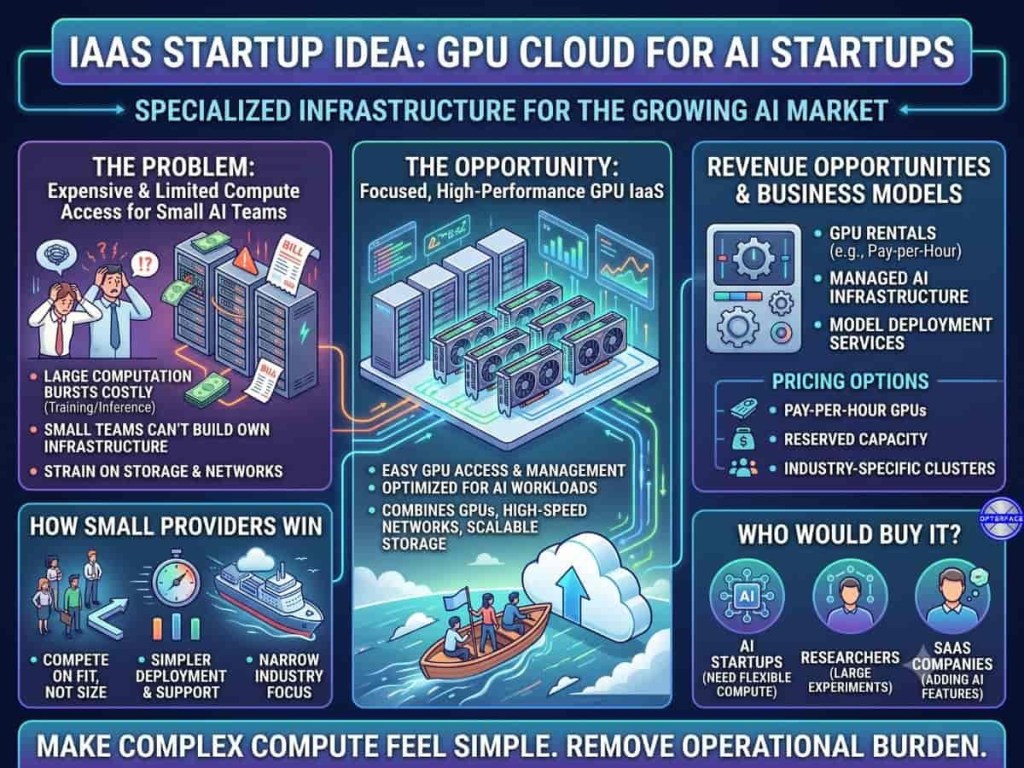
A GPU-focused IaaS startup idea can address one of the most obvious gaps in today’s cloud market: providing smaller AI teams with easier access to high-performance compute.
AI workloads frequently require powerful GPUs, fast networks, and scalable storage. As a result, specialised infrastructure presents a more focused opportunity than competing with a full cloud platform.
The Problem: AI Compute Is Expensive
AI development can necessitate large bursts of computational power. Training and running models can also strain storage and networking.
Bluewave notes that AI-optimized IaaS can offer GPUs, high-speed networks, and scalable storage for large data workloads and real-time inference.
This causes a problem for small teams. They may require serious computing for a short time but cannot justify building their own infrastructure. A startup can address this issue by making GPU capacity easier to access, use, and manage.
Why Small AI Companies Need Better GPU Access
A smaller provider does not need to have the largest fleet of hardware. It can concentrate on a single use case, such as model training, inference, or a particular industry. The goal is to reduce friction during provisioning, deployment, monitoring, and cost control.
Business Model Options
A GPU-focused provider could use a variety of pricing models:
- Pay-per-hour GPUs: Customers pay based on their actual usage.
- Reserved capacity: Customers commit to a longer period for predictable access.
- Industry-specific GPU clusters: Create environments for fields that have unique workload requirements.
Who Would Buy It?
The main customers could be:
- AI startups that require flexible compute.
- Researchers conducting large experiments.
- SaaS companies that are adding AI features to their existing products.
How Smaller Providers Can Beat Large Cloud Vendors
The gap is not simply due to lower-cost hardware. A smaller provider can compete by offering simpler deployment, improved support, specialised environments, or a narrow industry focus. As a result, the best cloud IaaS for startups may be determined more by fit than size.
Revenue Opportunities
A focused business can profit from:
- GPU rentals
- Managed AI infrastructure.
- Model deployment services.
The most powerful IaaS cloud solutions will make complex compute feel simple. A startup that removes the operational burden can generate significant value without attempting to become another behemoth cloud computing service provider.
For example, a service could combine Compute Engine cloud resources with pre-built AI environments and simple usage controls.
IaaS Startup Idea 2: Sovereign Cloud and Compliance Infrastructure
When customers need to keep their data within a specific country or region, a sovereign cloud can be an excellent IaaS startup opportunity.
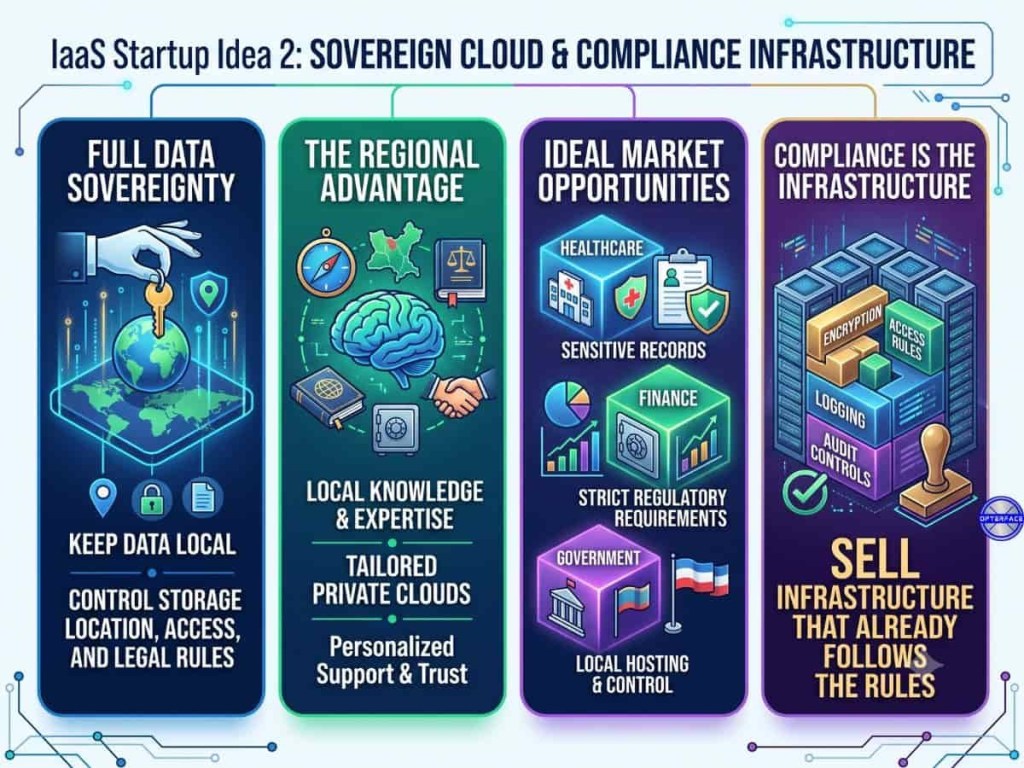
The core value is more than just cloud hosting. It gives customers more control over where their data is stored, who can access it, and what legal rules apply.
Why Countries Want Data Stored Locally
Data rules are becoming increasingly important as businesses migrate more systems online. Some organisations require local data storage due to privacy, security, or national regulations.
Instead of offering a wide range of services to all markets, a regional provider can tailor its IaaS private cloud to those needs.
This model can also accommodate workloads that cannot be freely moved across borders. Location can thus become a component of the product in cloud computing IaaS (Infrastructure as a Service) models.
The Impact of Data Residency Laws
Data residency rules can influence where customer data is stored and processed. They can also have an impact on how a company plans backups, access controls, and disaster recovery.
This allows a startup to incorporate compliance into its infrastructure from the start.
Industry Opportunities
Some sectors have a greater need for controlled infrastructure.
- Healthcare: Sensitive records may require strict access and location controls.
- Finance: Financial institutions frequently face detailed security and regulatory requirements.
- Government: Public-sector workloads may necessitate local hosting and increased control.
- Private Cloud: A regional private cloud can bring together local infrastructure with managed security and access controls.
Why Regional Providers Can Win
Large cloud infrastructure providers operate on a global scale. A smaller provider can compete based on local knowledge, regulatory expertise, support, and trustworthiness.
This is especially useful when a customer wants a straightforward answer to a simple question like, “Where is my data?”
Compliance as Infrastructure
The overlooked opportunity is to integrate compliance into the infrastructure itself. Instead of adding compliance after deployment, the startup could include approved regions, access rules, encryption, logging, and audit controls in the service.
This approach simplifies compliance management and may reduce customer risk. For a focused IaaS Startup Ideas business, the advantage is straightforward: sell infrastructure that already follows the rules.
IaaS Startup Idea 3: AI-Powered Infrastructure Monitoring Platform
An IaaS monitoring platform can use infrastructure data to generate early warnings. Most teams do not require additional dashboards. They must understand which server, storage system, or network link is likely to fail before users notice.
The Hidden Cost of Downtime
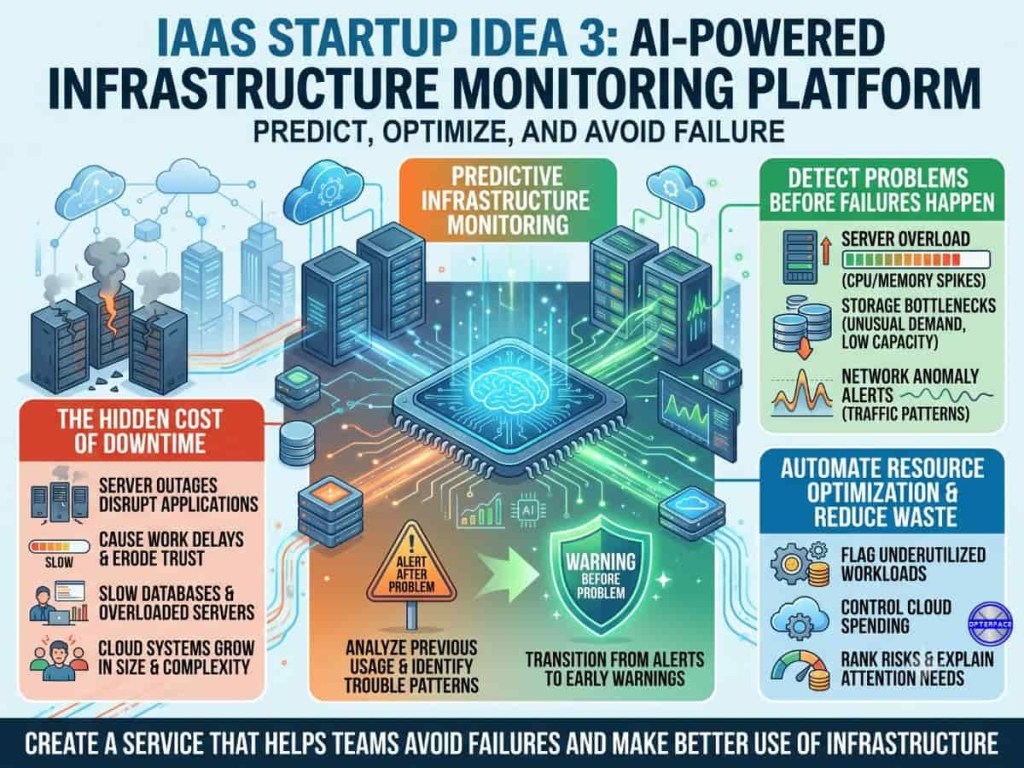
A server outage can disrupt applications, cause delays in work, and erode customer trust. Even in the absence of a complete outage, costs can rise. Slow databases, overloaded servers, and poor network connections can all have a negative impact on performance.
As cloud systems grow in size, infrastructure monitoring becomes increasingly valuable.
Predictive Infrastructure Monitoring
Traditional monitoring reveals what is wrong now. A smarter platform could analyse previous usage and identify patterns that frequently lead to trouble. The goal is straightforward: transition from alerts after a problem to warnings before it becomes one.
Detect Problems Before Failures Happen
A practical platform could monitor:
- Server overload: Detect rising CPU or memory usage before a system slows down.
- Storage bottlenecks: Indicate unusual storage demand or falling capacity.
- Network anomaly alerts: Detect traffic patterns that require attention.
This provides teams with a clearer picture of their network and infrastructure without requiring them to study dozens of dashboards.
Automate Resource Optimization
Monitoring can also aid in controlling cloud spending. If a workload uses significantly less capacity than expected, the platform may flag it for review. This converts cloud and infrastructure data into a cost-control tool.
Reducing Cloud Waste
The most effective product would connect monitoring to action. It could rank risks, explain why they are important, and identify which resource requires the most attention first.
This provides a valuable niche for an IaaS startup idea. Instead of selling another generic dashboard, you create a service that assists teams in avoiding failures and making better use of their infrastructure.
IaaS Startup Idea 4: Blockchain IaaS Startups (Infrastructure as a Service)
Blockchain IaaS Startups (Infrastructure as a Service) can be an effective solution for teams that do not want to build and maintain their own blockchain infrastructure.
The main idea is straightforward: provide the servers, storage, networking, and operational tools required to run blockchain workloads. This allows product teams to focus on their applications rather than managing infrastructure.
Why Blockchain Teams Need Infrastructure
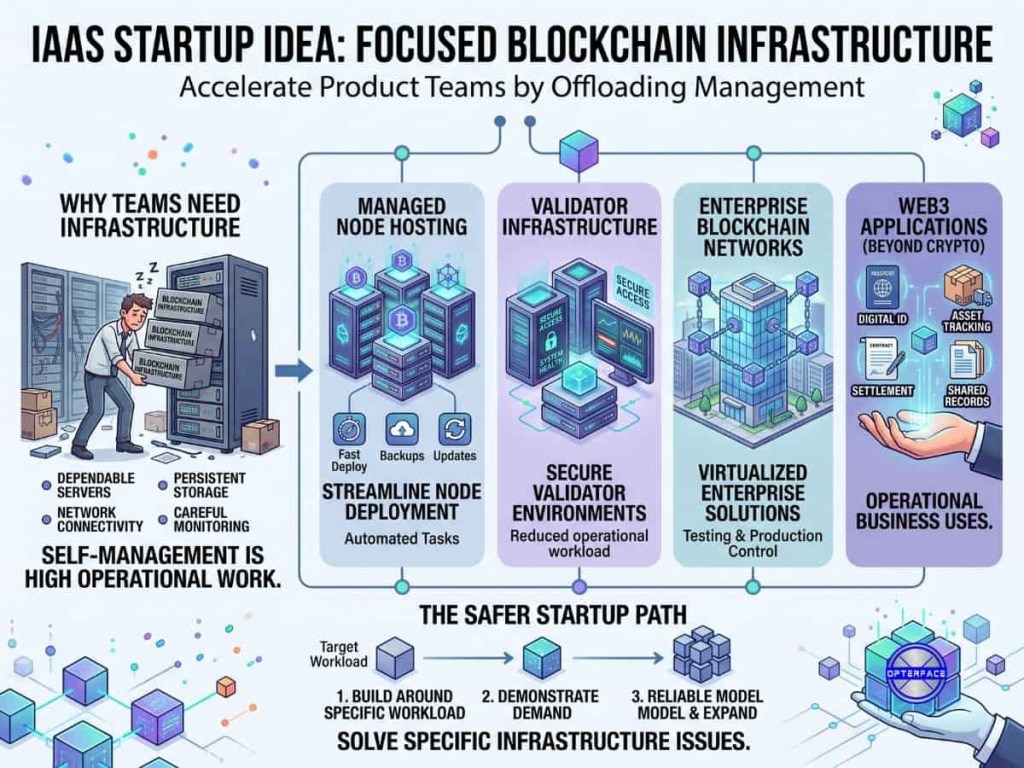
Blockchain systems may necessitate dependable servers, persistent storage, network connectivity, and careful monitoring.
Running these systems yourself requires additional operational work. A specialised provider can combine these tasks into a managed service.
The basic resources can be provided by a cloud IaaS (Infrastructure as a Service) model. A startup can then integrate tools designed for blockchain workloads.
Managed Node Hosting
Node hosting is a practical starting point. Customers could deploy blockchain nodes without having to set up and manage each environment individually. The provider could manage provisioning, updates, backups, monitoring, and basic support.
Validator Infrastructure
Validator workloads create a new niche. A service could offer dedicated environments with secure access, dependable networking, and monitoring. The goal should be to reduce operational workload while providing customers with clear visibility into system health.
Enterprise Blockchain Networks
Large businesses may require greater control than a public blockchain setup can provide. A virtualised network can help you create separate environments for testing, development, and enterprise blockchain workloads.
Network as a service features may also make it easier to connect applications and infrastructure.
Web3 Infrastructure Beyond Crypto
Trading and token speculation are not the only aspects of the market. Digital identity, asset tracking, settlement, and shared records are all possible applications of blockchain technology.
This makes room for infrastructure products aimed at businesses that use blockchain for operational purposes.
Market Reality: Opportunity, Risk, and Viability
The opportunity is greatest when you solve a specific infrastructure issue. The risks include uneven demand, stiff competition from major cloud platforms, and the operational complexities of supporting blockchain systems.
The safer approach for a new IaaS startup idea is to start by targeting a specific customer group. Build around a specific workload, demonstrate demand, and only expand after the infrastructure model is reliable.
IaaS Startup Idea 5: Edge and Distributed Cloud Infrastructure
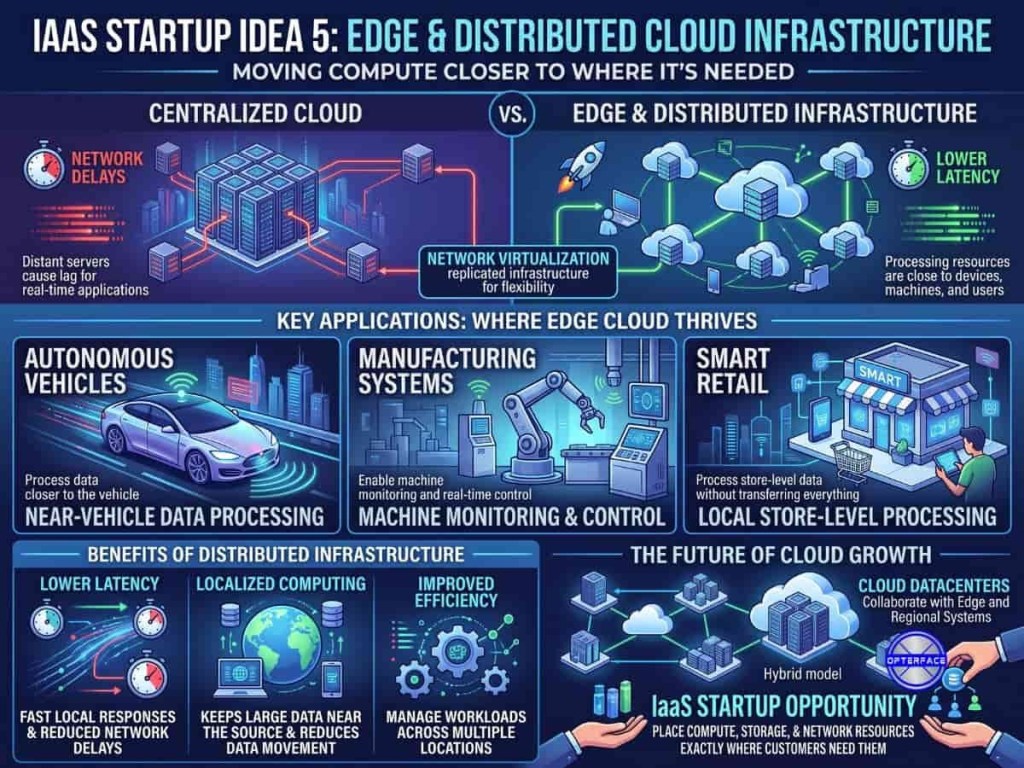
When an application cannot rely on a single central cloud location, edge and distributed cloud infrastructure can be a viable IaaS startup option. The basic idea is to relocate compute and data resources closer to where they are required.
Why Centralized Clouds Are Not Enough
A central cloud is ideal for many business applications. However, some workloads require faster local responses or must process large amounts of data near the source.
In these cases, sending each request to a distant data center can cause network delays.
This is where distributed infrastructure proves useful. According to StartUs Insights, network virtualisation can replicate infrastructure in the cloud, providing businesses with more flexibility in resource allocation.
The Rise of Real-Time Applications
Real-time systems cannot always rely on long-distance data transmissions. Edge infrastructure can bring computing resources closer to users, devices, and machines. This makes the model applicable to workloads in which timing is critical.
Instead of competing with each major cloud platform, a startup could create a focused network cloud service for a single industry. That narrow focus can work to its advantage.
Infrastructure for IoT, Robotics, and Smart Cities
The opportunity goes beyond websites and business software. IoT devices, factory machines, retail systems, and other connected technologies can generate significant amounts of local data.
Potential applications include:
- Autonomous vehicles: Process the data closer to the vehicle.
- Manufacturing systems: Enable machine monitoring and real-time control.
- Smart retail: Process store-level data without transferring everything to a remote location.
Localized Computing and Lower Latency
Regional cloud network providers can serve specific markets by locating infrastructure closer to customers.
The goal isn’t just speed. Local processing can also reduce unnecessary data movement and aid businesses in managing workloads across multiple locations.
Solutions like Google Distributed Cloud demonstrate how distributed models are becoming a part of the larger cloud infrastructure landscape. The exact architecture will depend on the workload, location, and compliance requirements.
The Future of Distributed Infrastructure
The next stage of cloud growth could involve many smaller infrastructure locations working together. Cloud data centers will remain important, but they may increasingly collaborate with edge sites and regional systems.
For an IaaS startup company, the opportunity is to solve a single clear problem: place the right compute, storage, and network resources where the customer needs them.
Challenges Every IaaS Startup Must Solve
- High Costs: Infrastructure requires capital for servers, storage, networking, power, support, and backups, even though IaaS lowers customer hardware costs.
- Big-Cloud Competition: AWS, Azure, and Google Cloud all have significant scale and a broad range of services. Startups should focus on a specific use case, market, or workflow.
- Security: Customers expect access control, encryption, monitoring, and cloud network security from the start.
- Trust: Buyers require confidence in uptime, support, data handling, and recovery plans.
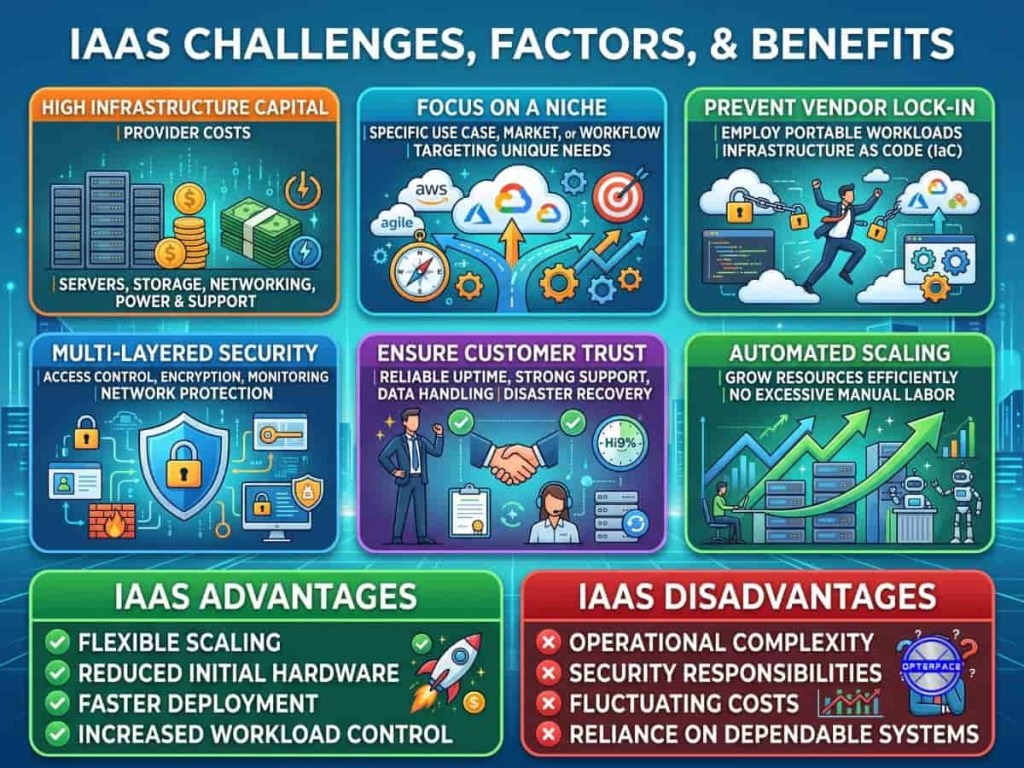
- Scaling: As the number of customers grows, so do compute, storage, traffic, and support requirements, so operations must scale without requiring excessive manual labour.
- Vendor Lock-In: Dependence on a single provider can lead to higher costs and less control. Portable workloads and infrastructure as code can be useful.
- Advantages of IaaS: Flexible scaling, reduced initial hardware requirements, faster deployment, and increased workload control.
- Disadvantages of IaaS: Increased operational complexity, security responsibilities, fluctuating costs, and reliance on dependable cloud and network systems.
How to Validate an IaaS Startup Before Investing Money
- Talk to Buyers: Consult with cloud, IT, engineering, and infrastructure leaders about costly issues and manual processes.
- Find a Real Problem: Address issues such as inefficient resource use, difficult deployment, complex monitoring, or a lack of specialised infrastructure.
- Build a Small Prototype: Before you build the entire platform, prove the core promise.
- Test Pricing Early: Compare usage-based, monthly, and reserved models to the value delivered. Question: “How to compare pricing models for IaaS (Infrastructure as a Service) platforms?”
- Measure Acquisition: Monitor lead generation, conversions, sales time, onboarding, retention, and customer acquisition costs.
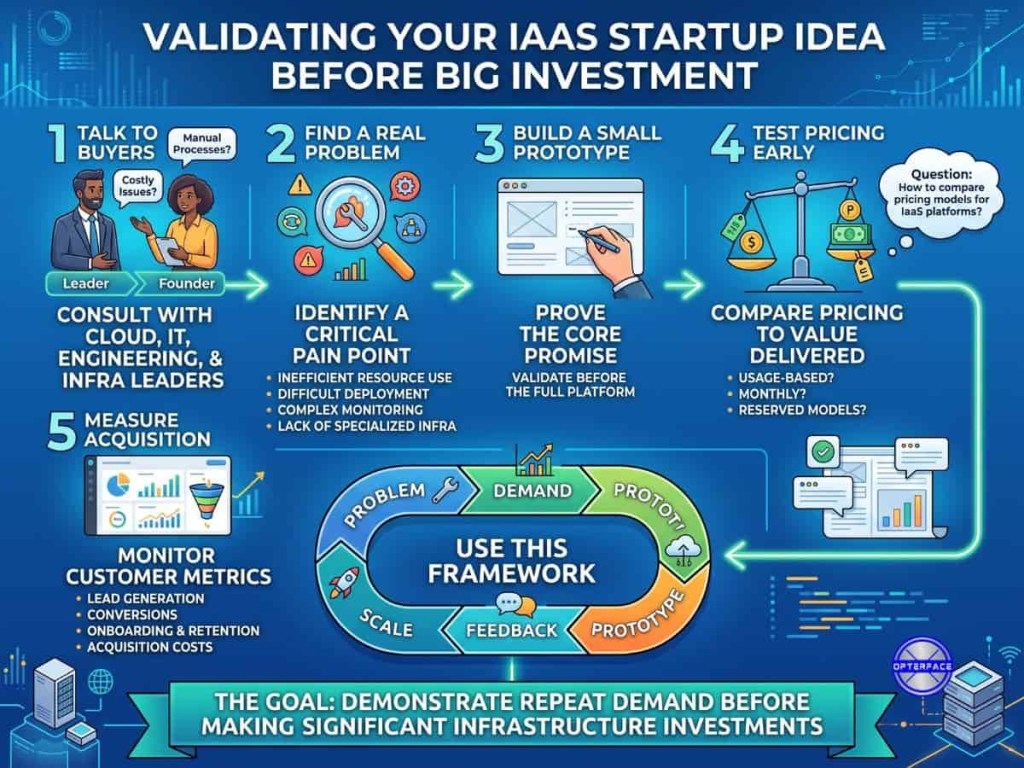
- Use This Framework:
- Problem
- Demand
- Prototype
- Feedback
- Scale
- Problem
The goal is to demonstrate repeat demand before making significant infrastructure investments.
The Future of IaaS Startups (Infrastructure as a Service)
- AI-Native Infrastructure: AI requires large datasets, rapid processing, and dynamic capacity. AI-optimized IaaS can include GPUs, high-speed networks, and scalable storage.
- More Automation: Automated systems can allocate resources, track performance, and perform routine tasks.
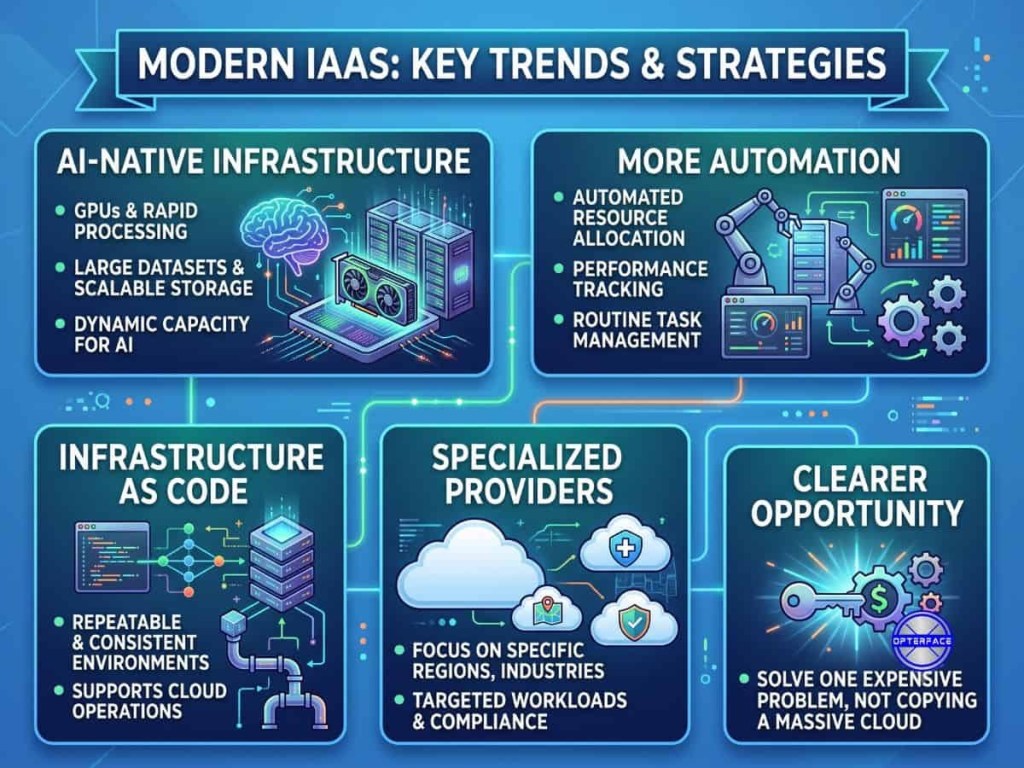
- Infrastructure as Code: Infrastructure as Code enables the creation of repeatable, consistent environments while also supporting infrastructure cloud operations.
- Specialized Providers: Large cloud platforms maintain their scale advantage, whereas smaller firms can focus on specific regions, industries, workloads, or compliance requirements.
- Clearer Opportunity: The future does not involve copying a massive cloud. It is about improving one expensive infrastructure problem.
Frequently Asked Questions
Here are the answers to the most frequently asked questions about IaaS, including its applications, risks, providers, costs, and startup opportunities.
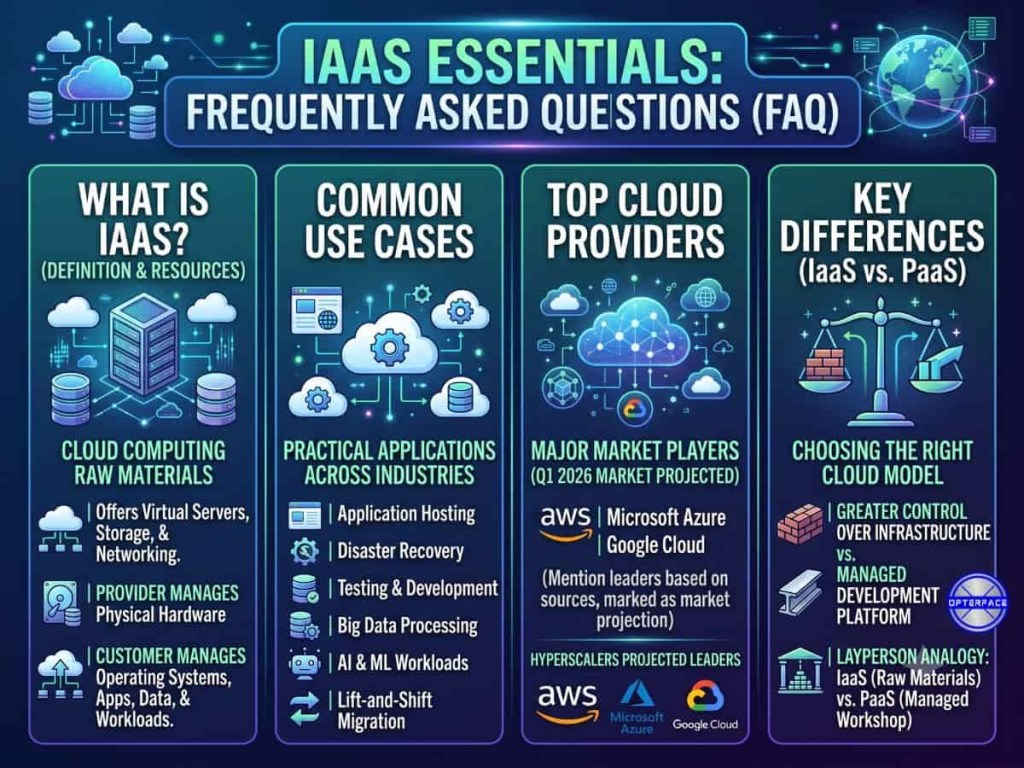
1. What is IaaS (Infrastructure as a Service)?
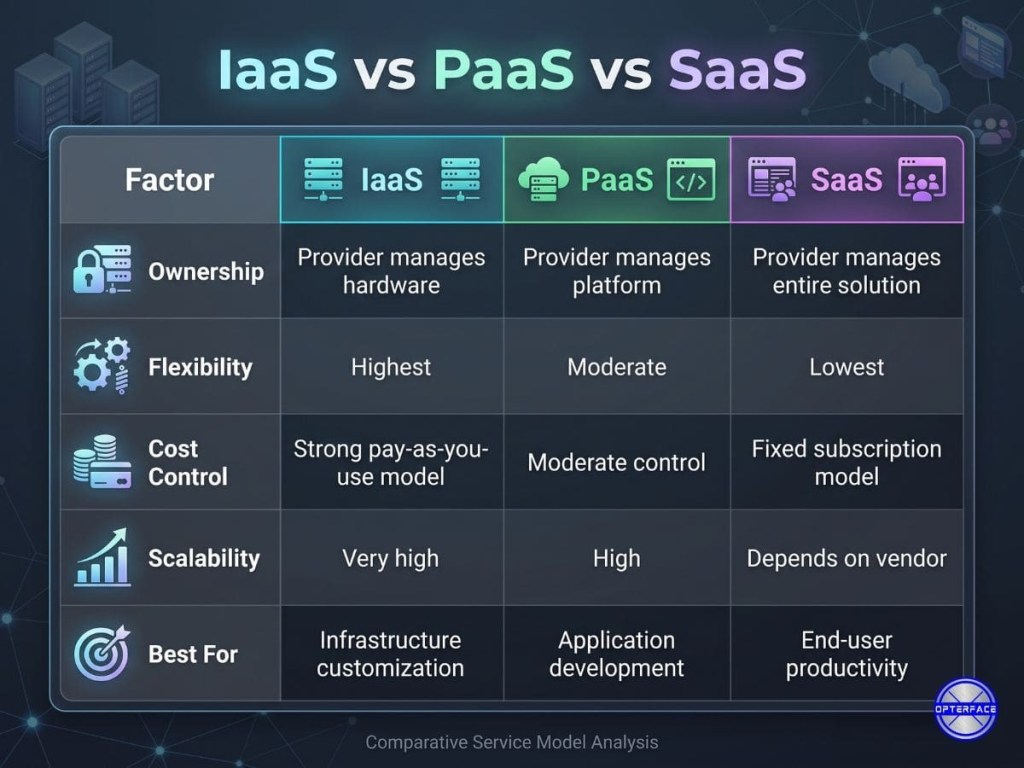
IaaS is a cloud model that offers virtual computing resources like servers, storage, and networking. The provider manages physical hardware, whereas the customer manages operating systems, applications, data, and workloads.
2. What is the difference between IaaS and PaaS?
IaaS provides greater control over the infrastructure and operating environment. PaaS manages more of the platform, freeing you to concentrate on application development.
In layperson’s terms, IaaS provides infrastructure, whereas PaaS offers a managed development environment.
3. What are some examples of IaaS Startups (Infrastructure as a Service)?
Examples of IaaS services (Infrastructure as a Service) include virtual machines, cloud storage, virtual networks, load balancing, and backup solutions.
These resources enable businesses to run workloads without purchasing physical servers. The specific services vary by provider.
4. What are the main components of IaaS?
The major components are compute, storage, networking, and security. They work together to provide the foundation for applications, data storage, system connectivity, and workload protection.
5. What are common IaaS use cases?
Common applications include application hosting, disaster recovery, testing and development, big data processing, AI workloads, networking services, and lift-and-shift cloud migration. These applications make IaaS suitable for both new and existing workloads.
6. What are the risks of using IaaS?
Security concerns, unexpected costs, operational complexity, outages, and reliance on providers are all major risks. Customers still manage a portion of the environment, so strong access controls, monitoring, backups, and cost management are essential.
7. What companies offer IaaS?
According to the market materials provided, AWS, Microsoft Azure, and Google Cloud will be the top cloud infrastructure providers in Q1 2026. These major players provide compute, storage, networking, and other cloud services.
8. Which is cheaper: IaaS, PaaS, or SaaS?
There is no universal winner. IaaS provides more resource control, whereas PaaS and SaaS can reduce the amount of infrastructure your team must manage. Workload, usage, staffing, and resource management are all factors that influence total cost.
9. What are the top 10 IaaS providers?
The provided sources do not include a verified top-10 ranking. They do establish AWS, Microsoft Azure, and Google Cloud as the leading hyperscalers based on the cited Q1 2026 market data.
10. What companies would benefit most by using IaaS instead of buying their own IT infrastructure?
IaaS is ideal for businesses that require flexible capacity, want to avoid large hardware purchases, or need to migrate to the cloud quickly.
It is also suitable for custom, legacy, testing, disaster recovery, and data-intensive workloads where greater infrastructure control is required.
Conclusion on IaaS Startups
AI is transforming infrastructure, paving the way for focused IaaS Startup Ideas. Businesses now require additional compute, storage, security, monitoring, and flexible infrastructure to support AI and data-intensive workloads.
However, the opportunity is not to create another AWS. It is to identify one costly problem that large providers do not adequately address and design a better solution around it.
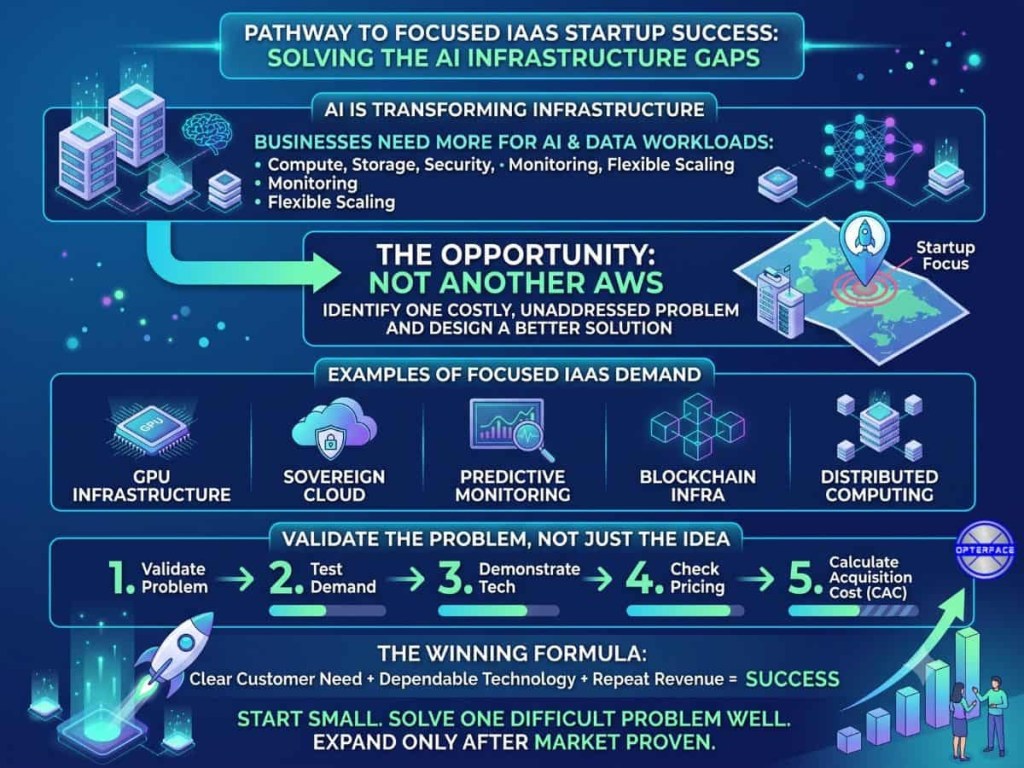
GPU infrastructure, sovereign cloud, predictive IaaS monitoring, blockchain infrastructure, and distributed computing all demonstrate how focused demand can emerge.
However, a good idea is not enough. You must validate the problem, test demand, demonstrate the technology, check pricing, and determine the cost of acquiring customers.
The best IaaS startup ideas will combine a clear customer need, dependable technology, and repeat revenue. Start small, solve one difficult problem well, and expand only after customers have proven the market exists.
Suggested Reads:
The Digital Marketing Mindset for 2026 and Beyond: What Truly Matters?
Digital Marketing Trends in 2026: Process of Content Creation to Win
Problems with AI Content Creation Process and Their Fixes
How to Rank on AI Overviews: Boost Your AI Visibility & Authority
NVIDIA Case Study: Journey of a Gaming Brand to a Tech Giant

