
Artificial intelligence has rewritten the content writing industry faster than anyone anticipated.
Every marketer suddenly had a shiny new Generative AI assistant, and writers panicked like caffeine-deprived interns.
But the truth is that content writing did not die; rather, it evolved. What about the writers who adapt? They will dominate in 2026 and beyond.
Let’s discover how smart content writing can outshine AI, protect your creative edge, and future-proof your career with skills machines still can’t replicate.
Also Read: 9 Power Plays: How to Build a Brilliant Career in the AI Era
Content Writing Trends to Stand Out in 2026
The rules of content writing are changing again. The writers who win next year are not only skilled but also strategic. Here’s what’s rising quickly:
- Personality-driven storytelling outperforms generic content.
- Middle- and bottom-funnel blog writing rises.
- Human-led SEO optimisation becomes critical.
- Brand voice becomes a competitive advantage.
- Hybrid writing (AI + human expertise) becomes standard.
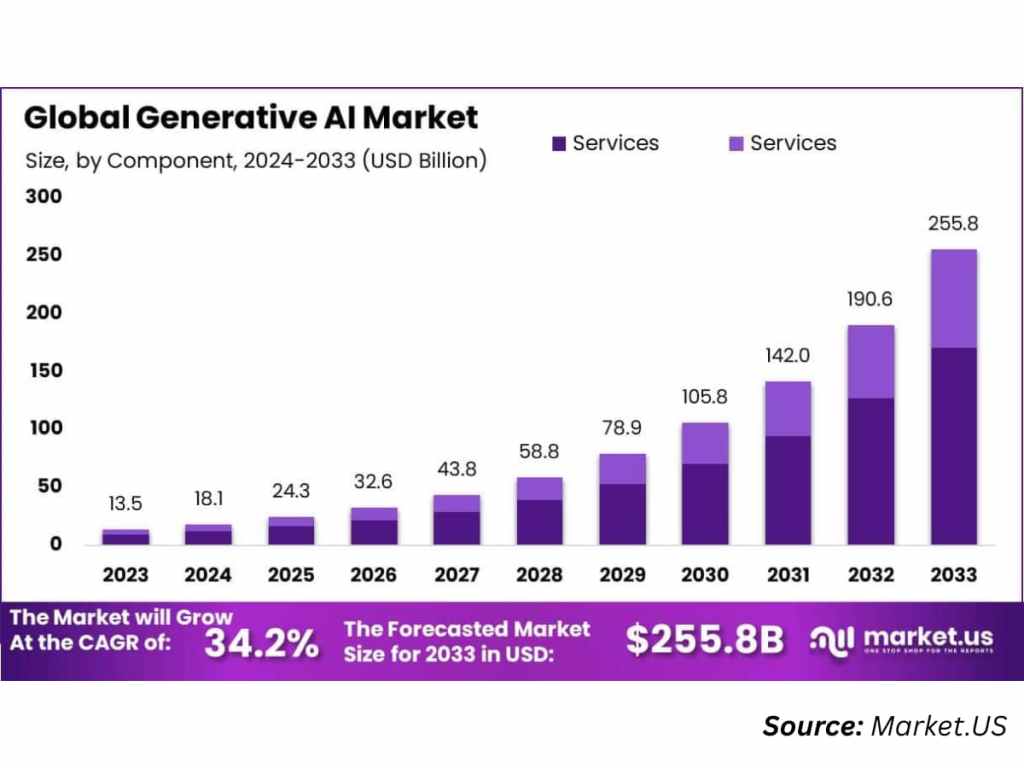
Major Advantages of AI-Powered Content Writing
AI is not the enemy; it is your turbo boost. When used correctly, AI for writing removes the grunt work from your plate, allowing you to focus on creativity.
- Faster first drafts.
- Instant idea generation
- Easy SEO optimisation
- Multi-format repurposing
- Improved research summaries
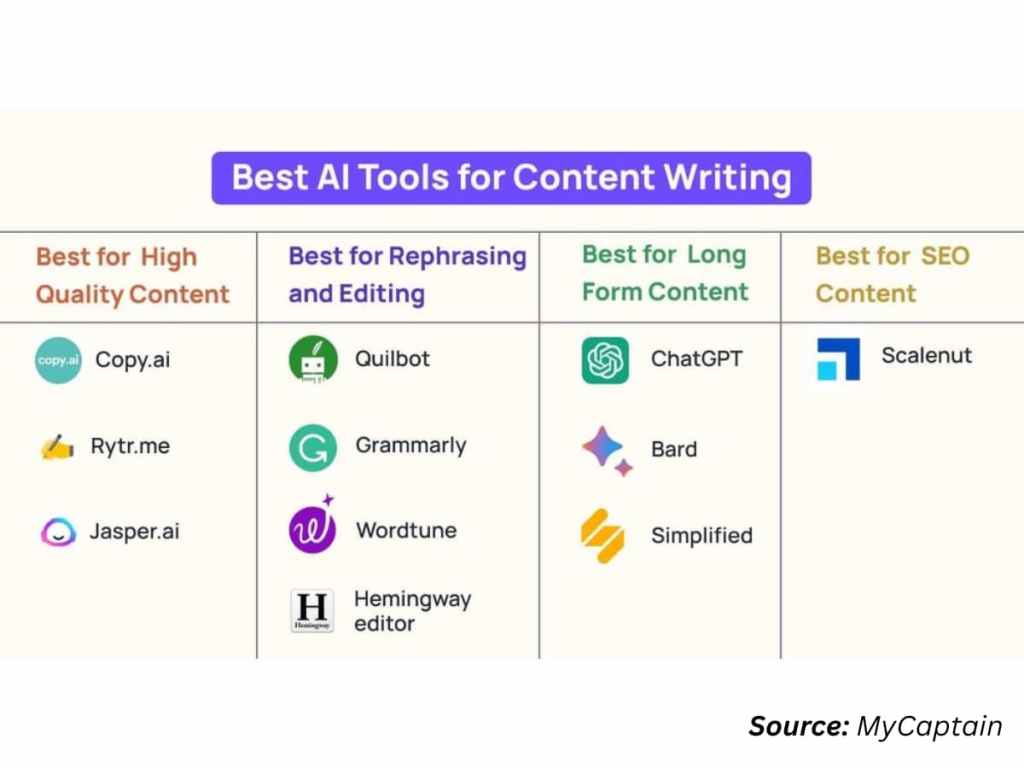
Best AI Tools for Content Writing
Let’s be honest: half of the industry pretends not to use Gen AI tools while secretly requesting ChatGPT 4 to “rewrite this but make me sound brilliant.”
Here are the tools that truly elevate your writing workflow without ruining your voice:
1. ChatGPT (OpenAI)
Still, the Swiss Army knife of copywriting, especially effective when paired with brand voice examples. Ideal for outlining, rewriting, creative prompts, and overcoming writer’s block.
2. Claude AI
The king of long-form structures. Claude is fantastic for blog post drafts, idea development, and sensitive topics where accuracy is critical. It generates thoughtful, logic-based writing.
3. Jasper
Designed for teams. Ideal for consistent brand messaging, multi-writer workflows, and high-volume SEO marketing content on blogs and landing pages.
4. Writesonic
For marketers who require speed. Its real-time search integration makes it ideal for staying up to date on trends, search engine marketing, and new content ideas without having to go through endless searches.
5. Grammarly AI
Tone, clarity, rewrite suggestions, and contextual improvements are included in addition to grammar.
Ideal for refining complex creative writing or simplifying technical articles.
These tools do not replace human intelligence; rather, they increase your capacity.
Consider them your digital interns who work around the clock, never ask for coffee breaks, and occasionally hallucinate.
How to Save Your Content Writing Career in the AI Era
Everyone is nervous about this part, but don’t worry. AI isn’t here to annihilate content writing careers; it’s here to eliminate the average ones. If you level up now, you’ll stand out even more than before.
1. Become the master of strategy, not sentences
AI can write a paragraph. It cannot devise a content strategy or comprehend buyer psychology.
Writers who think strategically win.
2. Own your brand voice
The future belongs to writers who can create an unmistakable tone that AI-generated text cannot match.
Your voice becomes your moat.
3. Build AI literacy
Not utilising AI is the new “I refuse to learn Google.”
Master prompting, AI check processes, and hybrid writing workflows.
4. Specialize deeply
2026 rewards niche expertise, such as SaaS, health, finance, UX writing, SEO optimisation, and so on.
Specialised content writing earns higher rates and has fewer competitors.
5. Become irreplaceably human
Interviewing, storytelling, humour, opinion, and lived experience are not weapons that AI companies can replicate.
The writer who incorporates real-world nuance always outperforms the one who simply stitches paragraphs.
If you treat AI as an assistant rather than a replacement, your writing will become faster, sharper, and more profitable.
Indeed, the content writing profession is becoming antifragile: as AI advances, human creativity becomes increasingly valuable.
Cautions While Using Generative AI Tools
AI is useful until it becomes chaotic. Here’s what you should avoid:
- Hallucinated facts (always check manually)
- Losing your voice (editing with intention)
- Plagiarism concerns (rewrite strategically)
- Legal/compliance risks (particularly in regulated industries)
- Over-reliance—when you stop thinking, your skill declines.
Use AI for speed rather than substitution.
Pros and Cons of AI Writing Tools
Pros
- Faster draughting
- Perfect for brainstorming.
- Excellent SEO support.
- Easy repurposing
- Helps overcome creative block.
Cons
- Generic tone.
- Possible inaccuracies.
- Limited creativity.
- Overuse can harm a website’s ranking.
- Cannot understand emotion.
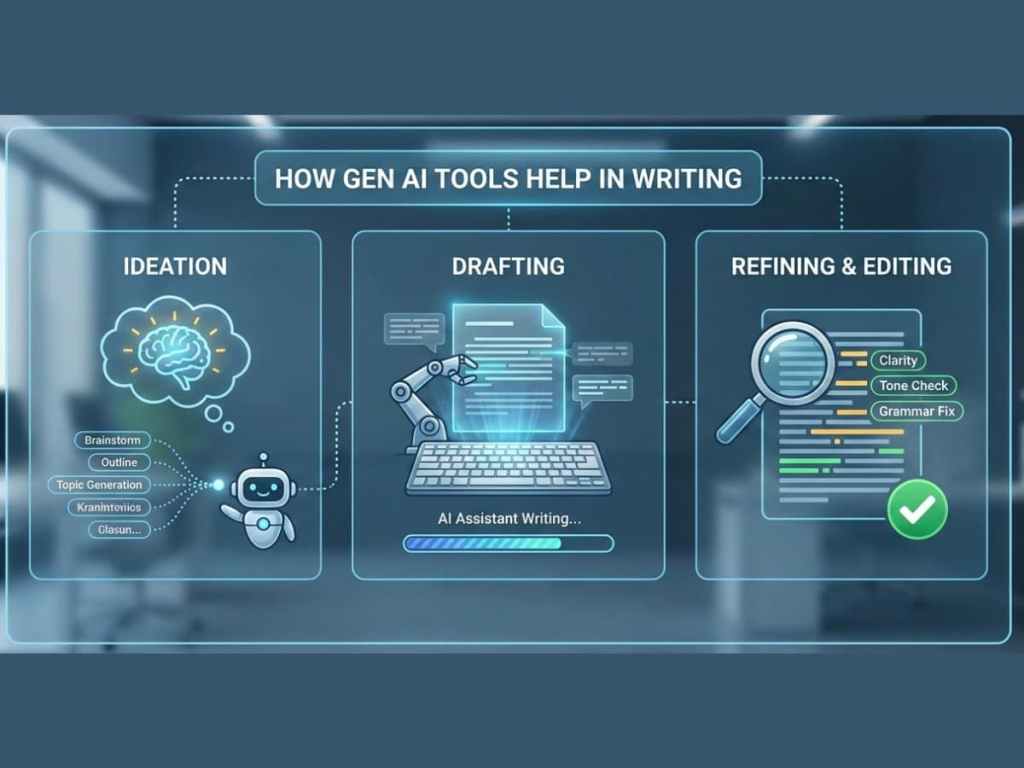
Where AI Writing Tools Outshine
AI excels in tasks that are repetitive, structured, and data-intensive:
- Draughting product descriptions
- Summaries
- SEO service metadata
- Keyword Clustering
- Social media post variations
- Long transcripts yield notes.
- Outlines
- Content rewrites
- Formatting
- Bulk copy generation
Where Manual Content Writing Is Still Ideal
Humans remain unbeatable in:
- Brand storytelling.
- Humour
- Emotional writing.
- Effective copywriting
- Interviews
- Opinion pieces.
- Niche expertise blogs
- Crisis Communication
- Complex creative writing.
- Bottom-funnel conversion writing
FAQs
Will AI replace content writers?
No, but it will replace average writers. Skilled humans who combine creativity and AI literacy will have more opportunities, not less.
How can I use AI safely for writing?
Use it for drafts, ideas, and structure. Always use human editing, SEO optimisation, fact checking, and brand voice refinement.
Is content writing still a good career in 2026?
Absolutely. Demand is shifting away from generic blogs and towards high-level storytelling, strategic writing, and human-led SEO marketing. Writers who adapt succeed.
What skills do writers need to stay competitive?
Brand voice mastery, storytelling, niche specialisation, strategic thinking, and familiarity with AI tools such as OpenAI and Claude AI.
Should I rely on AI for SEO tasks?
Partially. AI can help with keyword research, metadata, blog post outlines, and local SEO ideas — but a human SEO consultant or specialist ensures accuracy and compliance.
Conclusion
AI did not come to steal your career; rather, it came to challenge you to evolve.
Writers who embrace hybrid creativity will stand out from the crowd, develop unforgettable voices, and ensure the longevity of their craft.
The next era of content writing belongs to humans who use AI wisely, rather than fearfully.
Also Read: More Layoffs Coming – What AI Skills to Learn for Securing Jobs
 OPTERFACE