
If you’ve ever looked at the stock market and wondered, “How do people profit from all this chaos?” —Welcome to swing trading.
This strategy converts short-term price movements into real profits without the need for constant chart analysis. It’s intelligent, adaptable, beginner-friendly, and the closest thing to riding the financial tides.
What Is Swing Trading?
Swing Trading is a trading strategy in which traders hold positions for a few days to a few weeks, hoping to profit from price “swings.” It falls somewhere between day trading and long-term investing. This is what defines it:
- Uses technical analysis to time entries and exits.
- Captures stock market movements over the short to medium term.
- Allows for flexibility—no need to sit glued to your screen.
- Works with equities, forex, commodities, and indices.
- Ideal for traders seeking part-time participation with real profits.
🔗Learn more about the core concept: What Is Swing Trading.
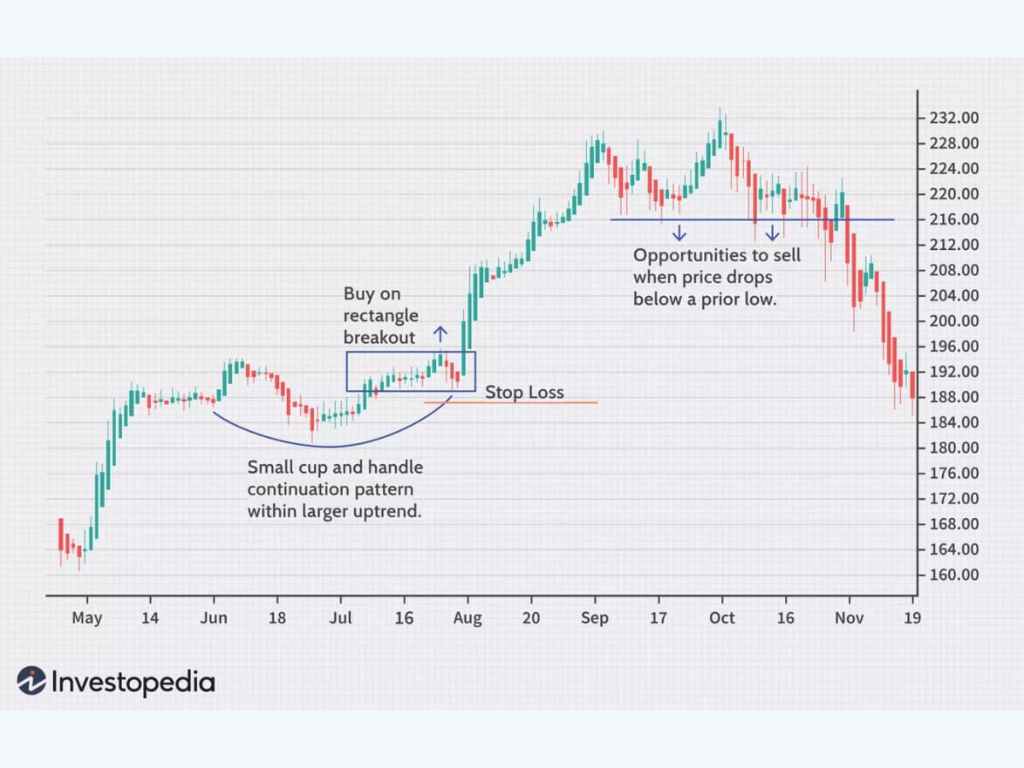
Different Types of Swing Trading Strategies
Swing trading is not simply “buy low, sell high.” It’s an art with several tactical approaches, each tailored to different market behaviours. Here’s the top five:
1. Breakout Strategy
You enter when the price rises above resistance or falls below support. Imagine the market saying, “I’m going places—jump on!”
2. Support & Resistance Strategy
Ideal for identifying reversals. You buy near support and sell near resistance, following classic swing trading logic.
3. Fibonacci Retracement Strategy
Used to determine potential pullback levels of 23.6%, 38.2%, 50%, and 61.8%. Excellent for predicting where the market “takes a breather.”
4. Trend-Following Strategy
You ride the wave. You’ll stay in as long as the trend continues. Simple, effective, and beginner-friendly.
5. Momentum Strategy (MACD / RSI)
Powered by indicators that measure strength and direction. When momentum is high, swing traders enter before the next wave hits.
Examples of Swing Trading
Here are five examples of how Swing Trading operates in the real stock market today:
- When a stock retests a major support zone, you buy in anticipation of a bounce.
- When the RSI reaches 25, it is oversold; swing long for a quick reversal.
- A breakout from a tight consolidation—follow the trend for 3-5 days.
- A breakout fails (breakdown), and you short the stock in anticipation of a correction.
- A moving average crossover (such as the 20/50 SMA) allows you to swing trade the shift in momentum.
Each example demonstrates how swing traders capture predictable, consistent movements even when traditional investors panic.
How to Do Swing Trading Efficiently
Swing trading can be extremely profitable—but only when done correctly. Here are five effective ways to master it:
1. Build a Clear Trading Plan
Your strategy should explain what, when, why, and how to trade. There’s no guessing. There is no “vibes-based trading.”
Remember: Maintain a Google Sheet journal to record wins, losses, setups, and emotions.
2. Use Technical Indicators Wisely
Swing Trading relies heavily on chart patterns and indicators. The essentials are:
- Moving averages (10/20 SMA)
- RSI
- MACD
- Bollinger Bands
- Volume Analysis
Never overload your chart. Clutter destroys clarity.
3. Risk Management = Survival
Never risk more than 1-2% of your account in a single trade. A trader who manages risk survives long enough to profit handsomely.
Stop losses are required, not optional.
4. Scan the Market Automatically
Swing trading relies on finding the right setups quickly. Filter stocks using scanning tools from platforms such as Interactive Brokers or TradingView.
- Volume
- Trend
- Volatility
- Breakouts
- Support zones.
This streamlines your workflow and saves you hours.
5. Use AI Tools Smartly
AI can help analyse trends, confirm signals, and identify early opportunities. However, misuse can quickly lead to disaster.
See how to apply AI correctly: 🔗How to Use AI in Finance Smartly without Losing any Money.
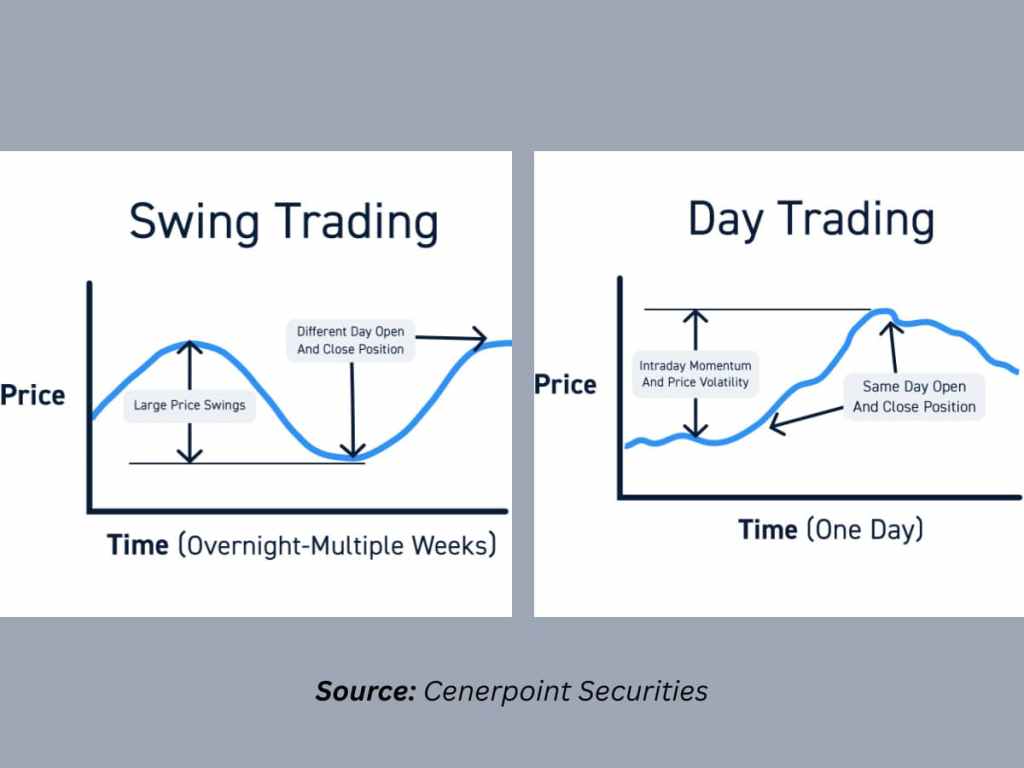
Day Trading vs Swing Trading
Both are effective strategies, but they result in very different experiences.
1. Time Commitment
Day trading = glued to the charts.
Swing trading = 15 minutes to an hour per day.
2. Stress Levels
Day trading is quick, stressful, and emotional.
Swing trading is calm, steady, and controlled.
3. Strategies
Intraday setups will not work in higher timeframes, and vice versa.
Both have completely different skill sets.
4. Frequency of Trades
Day traders make a large number of trades each day.
Swing traders prioritise quality over quantity.
5. Learning Curve
Day trading takes thousands of hours.
Swing Trading is both user-friendly and realistic.
Most traders begin with day trading, get burned out, and then discover swing trading. You’re discovering it right now—lucky you.
Pros and Cons of Swing Trading
Pros
- Less time-consuming—ideal for full-time employees.
- Lower transaction costs compared to a day trader’s dozens of trades.
- Increased profit potential by capturing multi-day trends.
- Less anxiety—no frantic chart hopping.
- Beginner-friendly and forgiving.
Cons
- Overnight risk of gaps or bad news.
- Slower returns than intraday scalping.
- Patience is required—it can take days to set up.
- The capital is locked for a few days.
- May miss intraday spikes that a day trader could capture.
Key Takeaways in Swing Trading
- Swing trading is best suited for part-time traders.
- It uses technical analysis to detect market fluctuations.
- Works with stocks, forex, commodities, and cryptocurrencies.
- Setup quality is more important than trade quantity.
- While indicators can be useful, price action reigns supreme.
- Managing overnight gaps is critical.
- Journaling increases your win rate quickly.
- Good risk management outperforms good predictions.
- Swing trading minimises emotional mistakes.
- Success necessitates consistency, not luck.
Pro Tips for Swing Trading
- Trade only when the setup is perfect; no forced trades.
- Combining RSI and trendline breaks yields high-probability entries.
- Use multi-timeframe analysis (daily and 4-hour charts).
- Always place stop losses outside of market noise.
- Do not trade earnings week unless you enjoy chaos.
- For low fees, consider using Interactive Brokers or similar platforms.
- Follow big-money volume spikes; they reveal the truth.
- Avoid using too much leverage when trading forex.
- Never hold trades that you don’t understand.
- Focus on 1-2 strategies until they are mastered.

FAQs on Swing Trading
Is Swing Trading good for beginners?
Yes. Swing trading is often simpler than day trading because it requires less screen time, less emotional stress, and clearer setups.
How much money do I need to start Swing Trading?
You can begin with as little as $100-$500 using platforms such as Interactive Brokers or low-cost stock brokers. Focus on learning rather than size.
Can Swing Trading be done part-time?
Absolutely. Most successful swing traders spend less than an hour per day analysing stock market movements.
What markets are best for Swing Trading?
Stocks, forex, indices, and even commodities perform well when volatility is present. Forex trading is popular among traders because it is available around the clock.
Is Swing Trading more profitable than day trading?
Most people say yes. It has a higher success rate, less stress, and fewer fees, resulting in more sustainable profits over time.
Conclusion
Swing trading converts chaotic market movements into predictable profit opportunities. When done correctly, it’s adaptable, realistic, user-friendly, and extremely effective. Start small, stay disciplined, stick to your strategy, and ride the market’s natural rhythm to consistent profits.
 OPTERFACE